By David L. Bristow
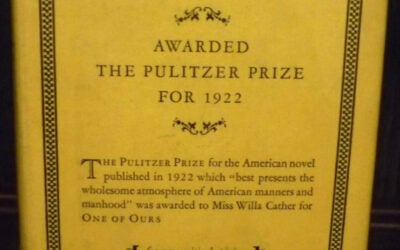
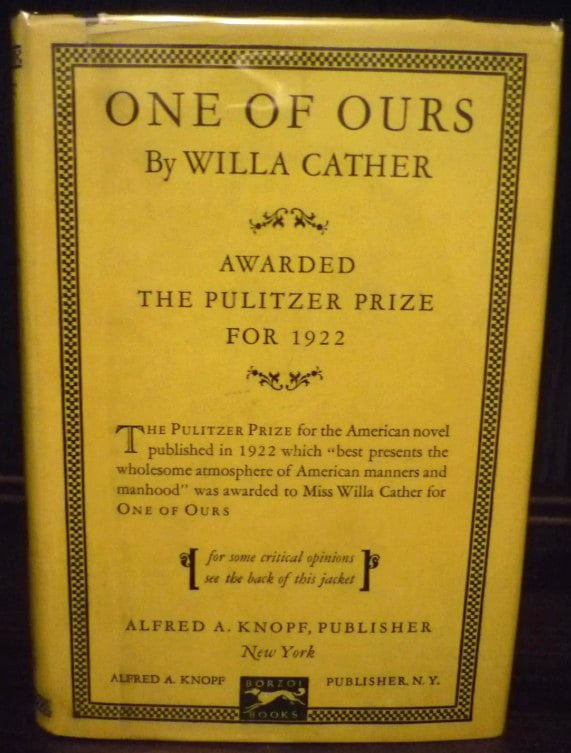
Willa Cather won the Pulitzer Prize for her 1922 novel, One of Ours. But reviews were mixed and writers such as Ernest Hemingway were dismissive of the story set during the recent world war. The wide range of opinions may reveal as much about the times as it does about the novel itself.
One of Ours has been described as a novel of restlessness and a search for purpose. Claude Wheeler is heir to a prosperous Nebraska farm but feels confined and lacking purpose until he goes off to fight in France. On the battlefield he discovers his talent for leadership and, at last, finds fulfillment.
For critics of the war, Cather’s story was naïve and unrealistic. “Its total effect,” said one reviewer, “is that of a recruiting pamphlet or a morale lecture by a Y.M.C.A. secretary.” Other readers saw the book as a good answer to what they saw as the unpatriotic cynicism of John Dos Passos’ WWI novel, Three Soldiers.
But in her personal correspondence, Cather revealed that she did not think of the novel as a war story and had more personal reasons for writing it.
Cather said she based the story on the life of her cousin, Grosvenor “G. P.” Cather, who was killed in action in 1918. “We were very much alike, and very different,” Cather wrote, “He could never escape from the misery of being himself, except in action…” Cather further revealed that she did not want the book marketed as a war novel.
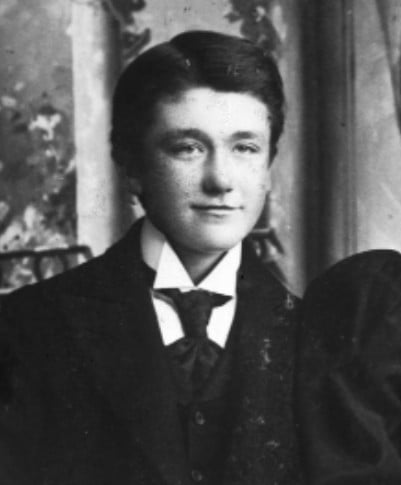
G. P. Cather
But neither she nor her book could escape the times. Criticizing the war had been taboo while the war lasted, but by the early 1920s American politics had drifted toward isolationism and—for many—a feeling that the war had not been worth fighting. Reviewers who felt that way tended to strongly dislike One of Ours. And some implied that a woman could not write accurately about war.
“The war, shown by this feminine writer,” said a reviewer for the Washington Herald, “is the melancholy, ennobling thing lady novelists like to think it.” Hemingway thought Cather borrowed the battle scene from the movie Birth of a Nation. “Poor woman,” he wrote to a friend, “she had to get her war experience somewhere.” And even in a review praising the book, Nancy Barr Mavity of the San Francisco Chronicle stated that “Willa Cather is the least feminine of American women novelists.”
In fairness, multiple critics—even those who praised the novel’s first half—felt that Cather’s battlefield narrative was less realistic and less accurate in its details (the way soldiers talk, for example) than the portion set in Nebraska. Cather used her late cousin’s wartime letters and interviews with veterans to develop the scenes in France, but naturally she had much deeper personal knowledge of rural Nebraska. One of Ours is still read today, but few consider it one of Cather’s best books.
Even so, shifting postwar attitudes and ongoing controversy colored public reaction to the novel. Reviewer Nancy Barr Mavity seemed especially aware of this crucial shift in public opinion:
“‘One of Ours’ thus far reads like a book written during the war instead of after the shock of awakening. Can Miss Cather be so simple as all that? No, but Claude is, and the identification of the author with the character is so perfect that not a line of criticism, of ironical comment is allowed to seep through. Some felt like the ‘Three Soldiers,’ but very many felt like ‘One of Ours.’”
One of Ours is still in print and also available as a free ebook through Standard Ebooks: https://standardebooks.org/ebooks/willa-cather/one-of-ours
References:
Reviewer quote, “Its total effect”: I Kaufman, “Willa Cather’s on War,” Brooklyn Eagle, Sept. 9, 1922: 3.
Example of review citing One of Ours as an answer to Three Soldiers: “Our Women Novelists,” Emporia Daily Gazette, Sept. 12, 1922: 1.
Cather quote is from a letter to Dorothy Canfield Fisher. Quoted in, “‘Wonderful Words’ in Willa Cather’s No-Longer-Secret Letters,” Morning Edition, NPR, April 30, 2013, https://www.npr.org/2013/04/30/178647158/wonderful-words-in-willa-cathers-no-longer-secret-letters
“Study in Futility is ‘One of Ours,’ by Willa Cather,” Washington Herald, Sept. 23, 1922, 4.
Hemingway quote, in Steven Trout, “Antithetical Icons? Willa Cather, Ernest Hemingway, and the First World War,” Cather Studies: Willa Cather at Cultural Icon, Vol. 7, Guy Reynolds, ed. (University of Nebraska Press, 2007), 269.
Nancy Barr Mavity, “One Soldier to Whom War Remained Bright Adventure,” San Francisco Chronicle, Sept. 24, 1922: 5.