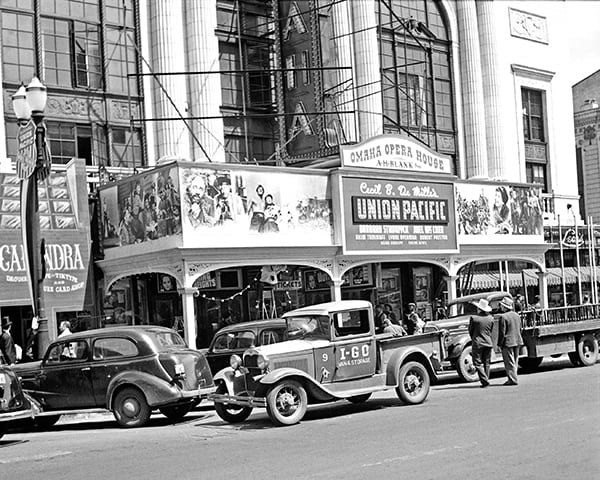
The Omaha Theater decked out for the premier. RG3882-35-108
Various Hollywood movies have been filmed at least partly in Nebraska, with a smaller number holding their world premier event in the state. The first was Boys Town, premiering in Omaha in 1938. Lincoln hosted its first Hollywood premiere in 1941 for Cheers for Miss Bishop, based on a novel by Elmwood’s Bess Streeter Aldrich.
But the largest event, one that drew an estimated quarter of a million people to Omaha, was the premiere of Cecil B. DeMille’s Union Pacific in 1939. The movie opened simultaneously in three Omaha theaters (Omaha, Orpheum, and Paramount) and was part of Golden Spike Days, a four-day celebration (April 26-29) featuring parades, entertainment, contests, and even a historical exhibit curated by the Nebraska State Historical Society that drew 43,000 visitors to the City Auditorium.
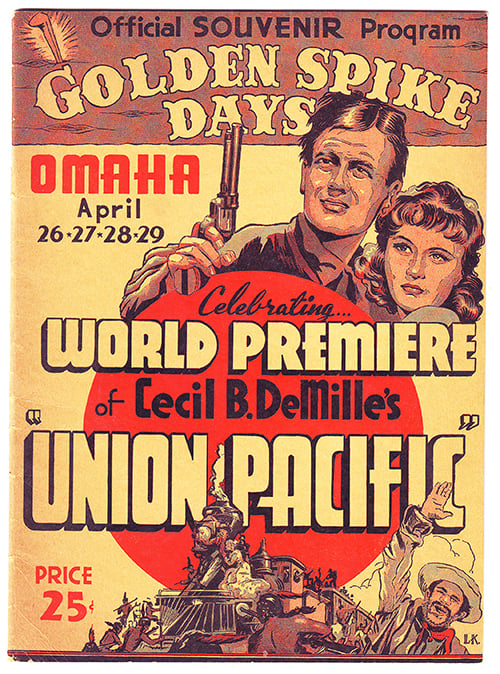
1939 souvenir program. RG1035.AM
Downtown merchants transformed their shops to resemble 1860s storefronts—or rather, to resemble far-fetched Hollywood representations of such. People dressed up in costumes based on their ideas of the past, and men grew beards for contest. Nebraska History Magazine printed a remark about a follow-up 1940 Golden Spike Days that surely applied to the 1939 event: “True, there were incongruous notes: clouds of smoke blown from demure white sunbonnets; brilliantly lacquered nails on hands that wore lace mitts and held tiny parasols.”
Some 200,000 people lined the streets for the big parade featuring director DeMille, actress Barbara Stanwyck, and other cast members riding in horse-drawn carriages flanked by mounted guards in Civil War uniforms. With 10,000 costumed marchers and “more horses than have been seen on Omaha streets in years,” the parade was described by the World-Herald as a “combination of Mardi Gras, Mummers’ parade and Frontier Days.”
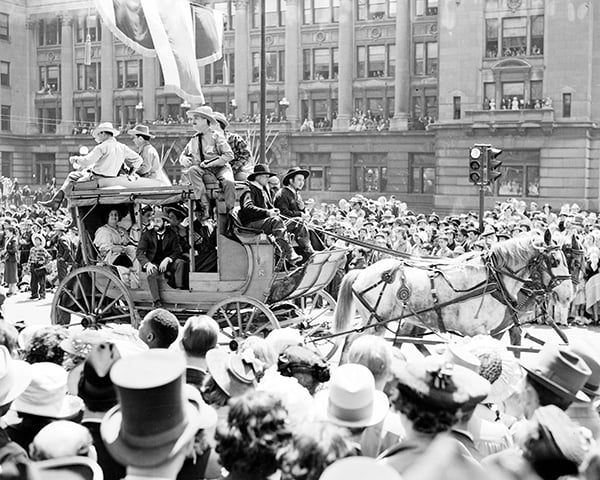
Parade passing the Douglas County Courthouse. RG3882-35-49
But while Omahans were celebrating a glamorized past, newspapers were also filled with ominous events of the present—pronouncements by Hitler and Mussolini, the beginning of military conscription in Britain, and an enormous military budget signed into law by President Franklin Roosevelt. Omaha’s enthusiastic crowds thrilled city leaders, but others could not help but make comparisons to more sinister mass events happening elsewhere.
“The Golden Spike hysteria that is gripping Omaha this week, potentially dangerous and similar to the mob psychology through which dictators rule their people, is healthful as a needed release of emotional energy, according to Creighton university psychologists,” the World-Herald reported on April 29. “By growing beards, wearing 1869 clothes and standing in line long hours to see movie stars, people are able to lose their personalities.”
Americans had seen newsreel footage of Germans ‘losing their personalities’ in massive Nazi rallies, and in February, 20,000 Americans had attended a Nazi rally in New York City’s Madison Square Garden (where they were met by 100,000 anti-Nazi protestors).
But during Golden Spike Days, going with the crowd was OK. “‘It is like taking a vacation,’ Father Noonan [of Creighton] said. ‘It is a healthful escapism.’” Folks would need plenty of that in the coming years.
—David L. Bristow, Editor (An earlier version of this article first appeared in the Winter 2023 issue of Nebraska History magazine.)
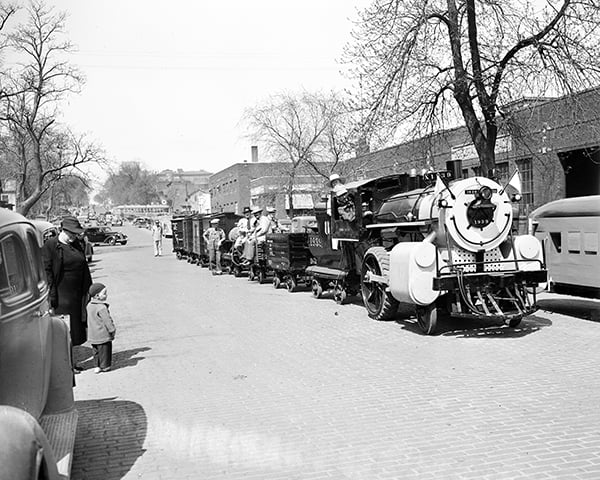
A miniature train awaits its turn in the parade. RG3882-35-56
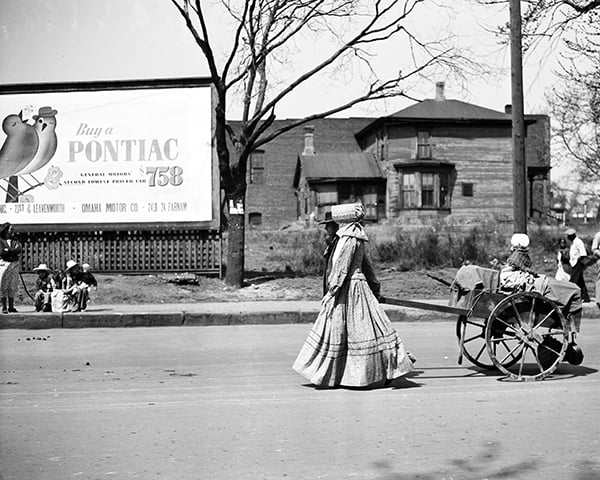
Portraying Mormon handcart pioneers… near a Pontiac sign. RG3882-35-57
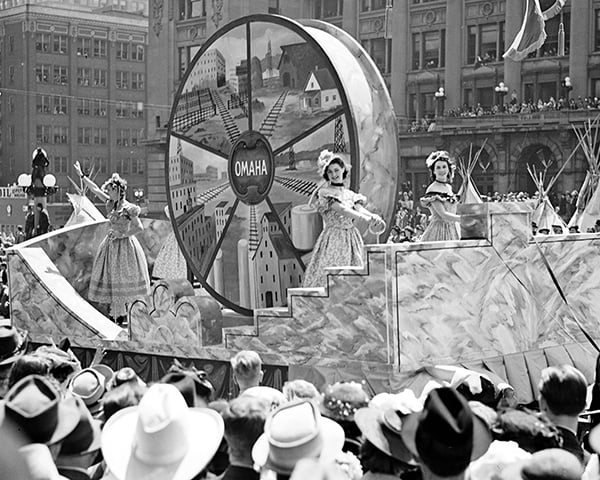
For all its urban pretentions, Omaha was nevertheless proud of being a rail hub in farm country. RG3882-35-68
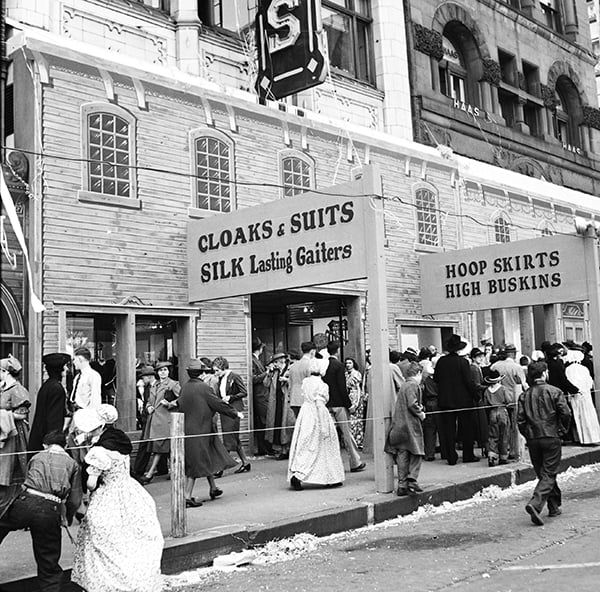
Downtown businesses added temporary false fronts and signs. RG3882-35-101b