Most people think of archives as rows of books, photos, and microfilm, but just as digital media has become central to government, business, and personal affairs, archives too have gone digital. The NSHS has almost 30 TB of electronic data in our online repository Preservica, and we add more every week. While some of that comes from digitized items, an increasing percentage of that consists of records that were created electronically (or, as we say, “born-digital”). As the number of born-digital records grows, so does the importance of preserving them before the storage drives fail or the files become obsolete or corrupted.
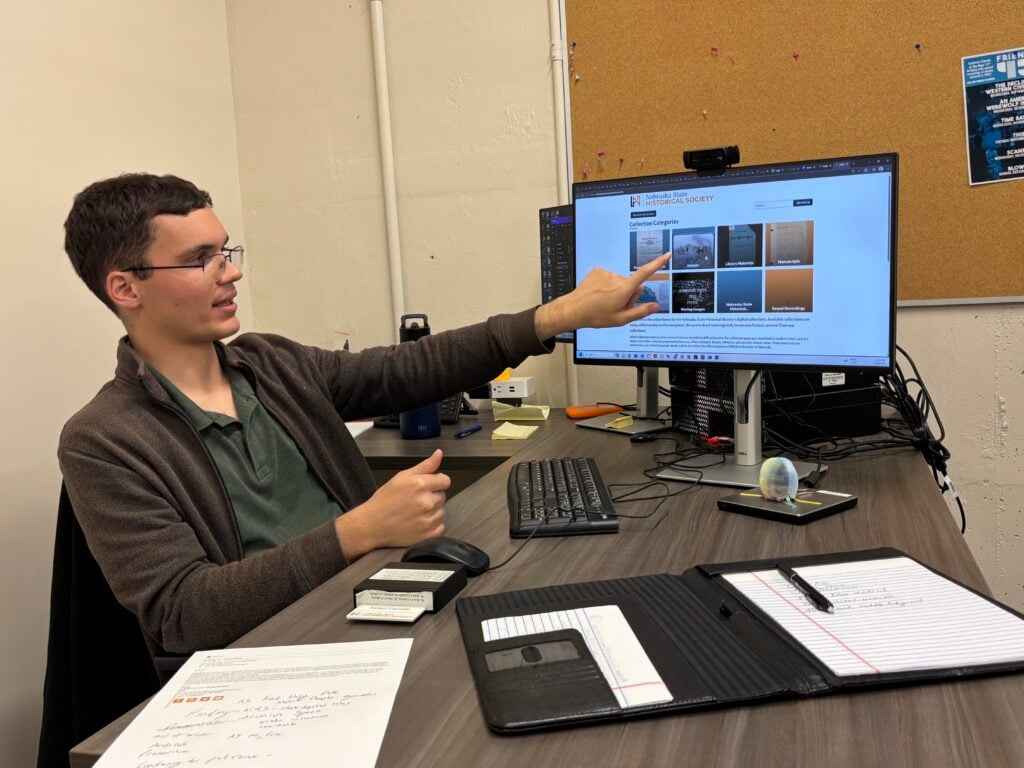
NSHS Digital Archivist Aidan Canner explaining the benefits of Preservica and ArchivesSpace.
Whether it’s a floppy disk with town hall meeting minutes or a thumb drive with saved emails, born-digital records have archival value too! Most correspondence, to use one example, used to be analog (like this letter written by a former German POW to an American captor he befriended at Fort Robinson), but you probably communicate digitally via email, text message, or social media every week. In the same way that preserving that letter gives us a look into a fascinating moment and relationship of the past, so might your electronic records showcase the history you’re making now! It could be cell phone pics of your hometown’s annual block party, Photoshop mockups for event fliers, or the emails and Word docs that went into your newspaper article: we’re looking for donations of digital records that document Nebraska now.
Interested in donating? Visit the Collections Donation page to learn more before telling us all about your donation. If you have any questions, feel free to email us at reference@hn.libanswers.com
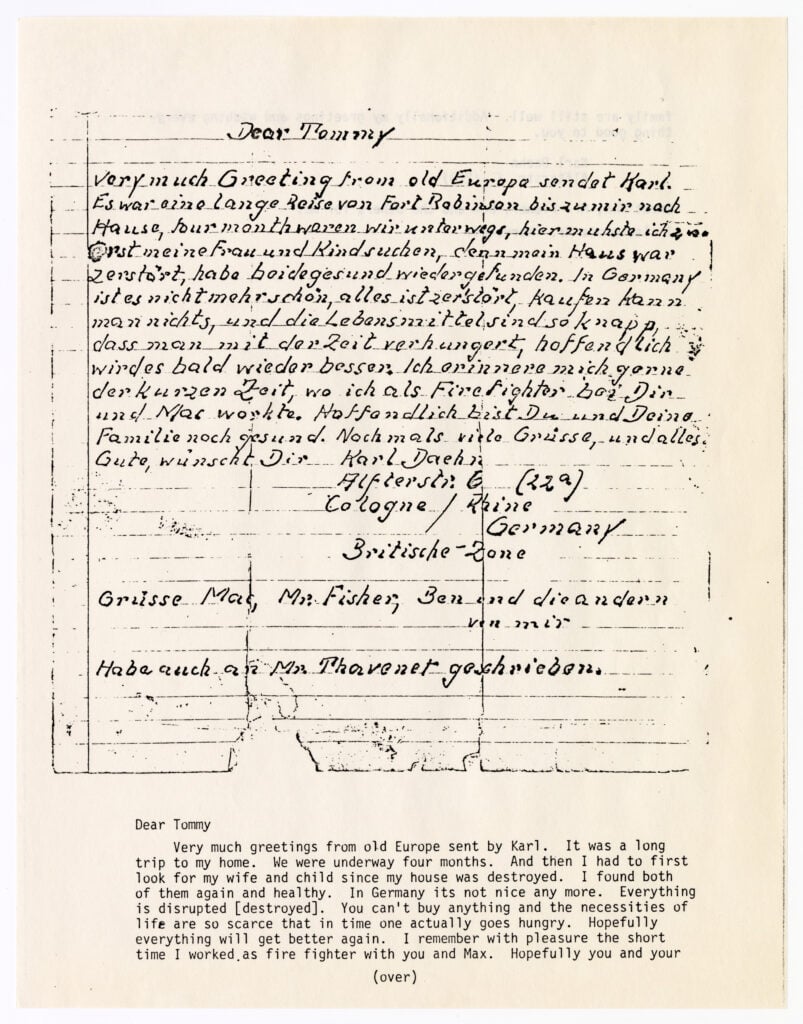
Translation of a letter from Karl Daehn, former German prisoner of war at Fort Robinson, Nebraska. Daehn writes to friends that he met while working as a POW in Nebraska. NSHS RG1517
(Published October 2026)