The Nebraska State Historical Society is pleased to announce that four Nebraska structures and one entity have been listed on the National Register of Historic Places. Ash Creek Ranch Barn in Newport, First National Center in Omaha, Grafton High School, Nella Aldrich-Stoddard Farm in Auburn, and Nebraska Women in Trades, a Multiple Property Documentation (MPD), were considered and selected by the National Parks Service for listing. The National Register of Historic Places is the nation’s inventory of properties deemed worthy of preservation.
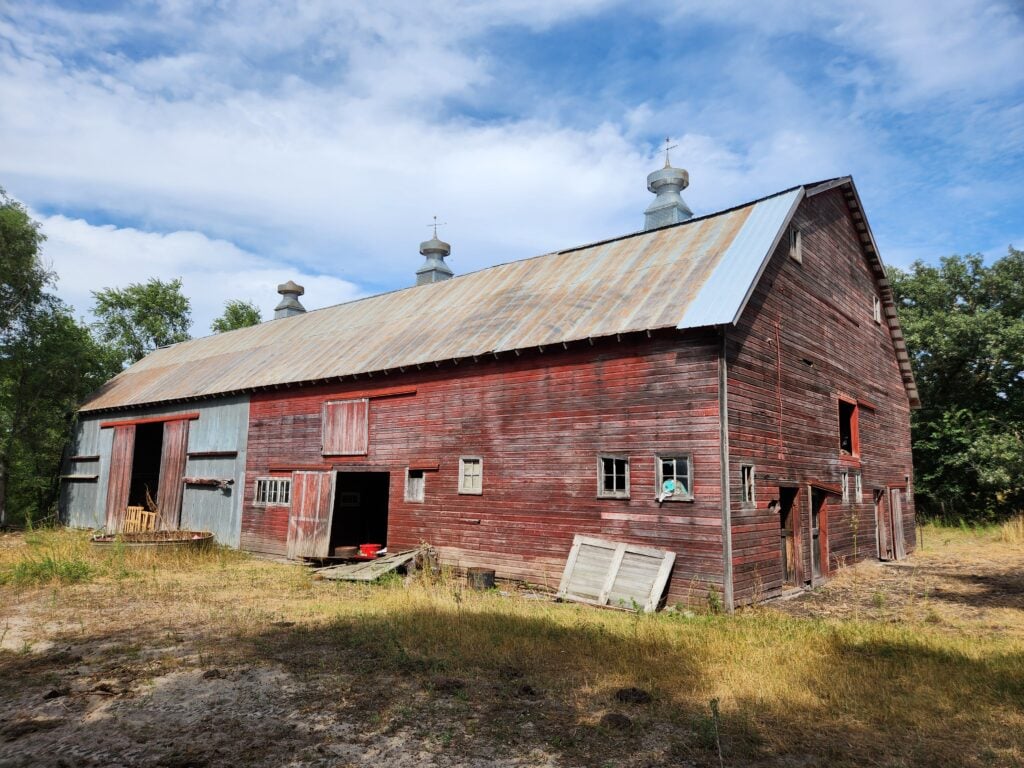
The Ash Creek Ranch Barn
The Ash Creek Ranch Barn is significant to local history because barns of its design that continue to exist in an unaltered state are uncommon in Rock County. It is an excellent example of barns built to facilitate farming and ranching operations in an agricultural transition period in the fringe areas of the northeastern sandhills of Nebraska. The barn was built in 1940 by the locally prominent rancher Rollo Allen “Chic” Coffman, who began to accumulate landholdings in the area in 1925. His operation raised hay, grain, and cattle.
First National Center
The First National Center in Omaha is significant to state history as part of the history of commerce in the early 1970s. First National Center is a 22-story office building that features a public plaza, private terrace, grand interior banking hall, and glass tower above the fifth floor. A parking garage, drive-up banking access, and shopping arcade surround the building on the block it shares with a neighboring hotel. First National Center was the headquarters building of First National Bank of Omaha from its construction until the early 2000s. The bank was founded in 1863, before Nebraska became a state.
The founders’ business interests extended beyond the bank, for example, to the creation of Omaha’s Union Stockyards and into real estate and railroads, and they were involved in promotional projects such as the 1898 Trans-Mississippi and International Exposition, held in Omaha. The success of the bank leaders’ other businesses, which the bank serviced, made the bank successful. Between World War I and World War II, FNBO navigated economic instability in part, the nomination states, “by offering home-heating coal, auto, and home-improvement loans to urban middle-class consumers” rather than pursuing a riskier strategy of investing in less-established businesses and the highly depressed agricultural sector.

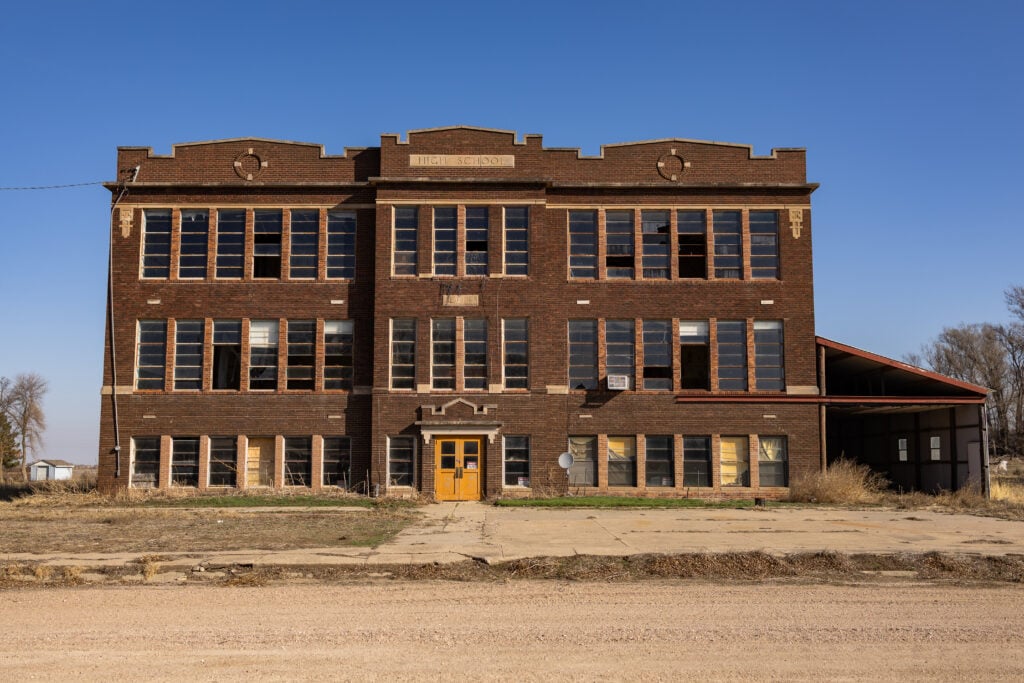
Grafton High School
Grafton High School is significant to local history as part of the histories of education and of architecture. The two-story Grafton High School was built in 1914 with basically symmetrical Neoclassical Revival massing and Medieval Revival embellishments. The building reflects the townspeople’s desire to keep up with evolving standards for educational outcomes and public facilities. The community also hoped that the 1914 school and the district’s curriculum would attract students from the surrounding countryside, making it an example of the kind of small-town institutions of the early twentieth century that contributed to rural depopulation.
Nella Aldrich-Stoddard Farm
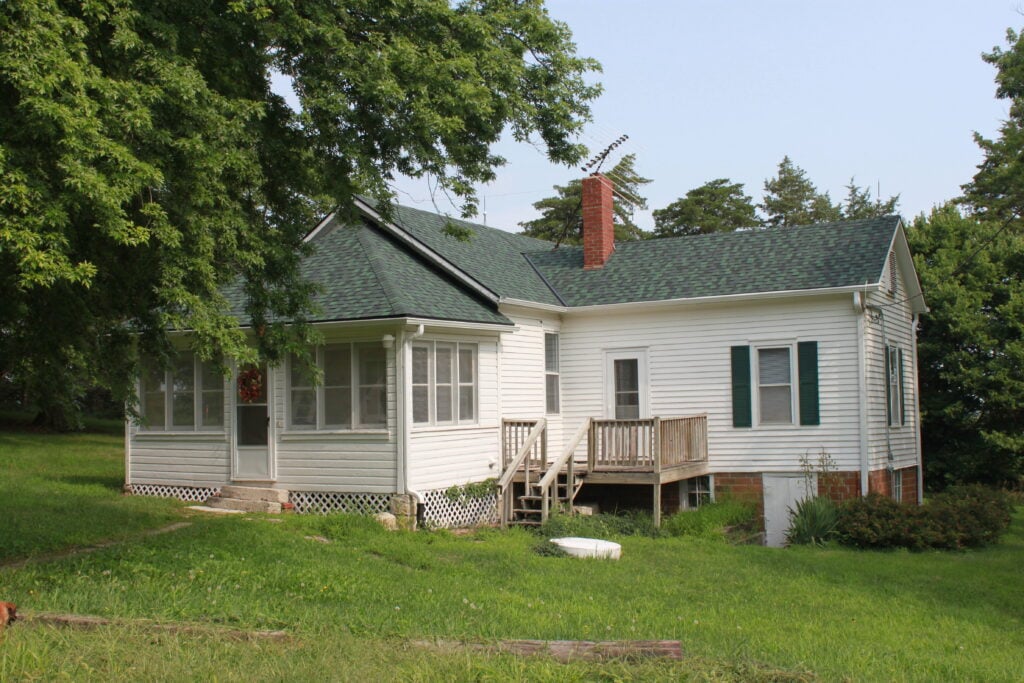
The Nella Aldrich-Stoddard Farm is significant to local history as part of the history of agriculture in 1889–1975. The farm, located in rural Auburn in Nemaha County, was built up from 1889 onward by Nella Aldrich and Collins DeWayne Stoddard and their descendants out of a 51-acre parcel given to the couple by Nella’s parents, Benton and Martha Jane Aldrich. The Stoddard farm grew after the Aldriches died with the addition of an adjoining 40-acre parcel that had been the first they acquired when they migrated to Nebraska in 1865. The farm is significant to agricultural history for its continuous ownership by the Aldrich-Stoddard family, continuously small size, lack of mechanization, and production for subsistence rather than commodities markets.
The process of writing the nomination benefited greatly from Nella and Nainie Stoddard’s meticulous record keeping of what they planted in their gardens, what they harvested, what pests and weather conditions they contended with, and what, if anything, they bought and sold. The land was worked either by hand or with horsepower until 1957; only then did the Stoddards buy a tractor. Hugh Stoddard farmed until his death in 1988, cultivating a reputation for farming with an ethic of conservation and sustainability along with his produce.
Nebraska’s Women in Trades
Nebraska’s Women in Trades is a Multiple Property Documentation or MPD—a cover document for historic properties that may be nominated individually or as part of a district. MPDs themselves are not nominations. Instead, they are more general documents that present substantial contextualizing research that is applicable to many properties and/or define property types that are associated with a historic context.
Nebraska’s Women in Trades highlights the ways that women have been part of the construction of buildings, landscapes, and towns and cities, as both vernacular and professional builders. The MPD covers the entire period of the state’s history, but particularly emphasizes the twentieth century. It discusses the building trades in the United States overall, and women’s experiences in the building trades across the country, and explains how Nebraska women’s experience was at some points similar to and at others different from national generalizations. The MPD further focuses its findings by dividing them into professional groupings, many of which highlight specific individuals. Finally, although no property type is inherently associated with women, the MPD examines one property type per historic context that is particularly expressive of Nebraska women’s experience of the building trades in that historical period.
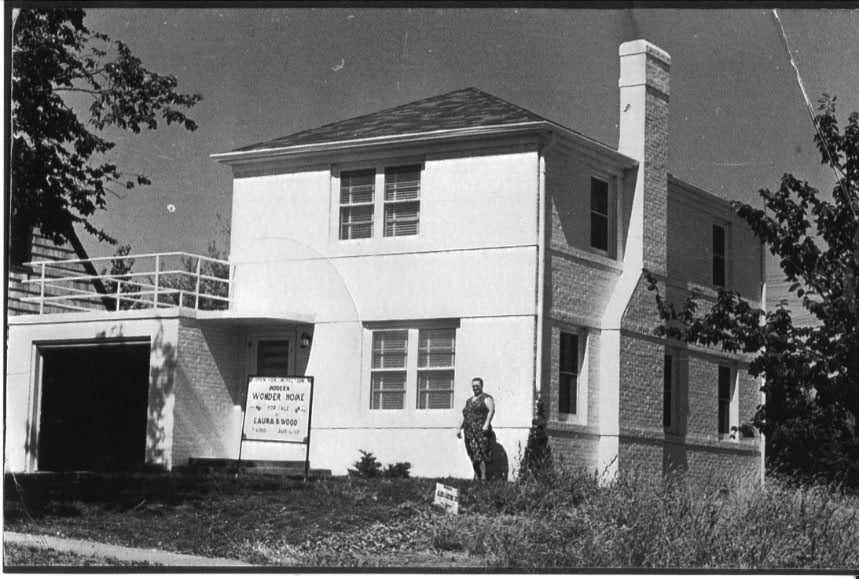
Builder Laura B. Wood shown in front of residence she developed at 1730 Pawnee in Lincoln at left, courtesy City of Lincoln.
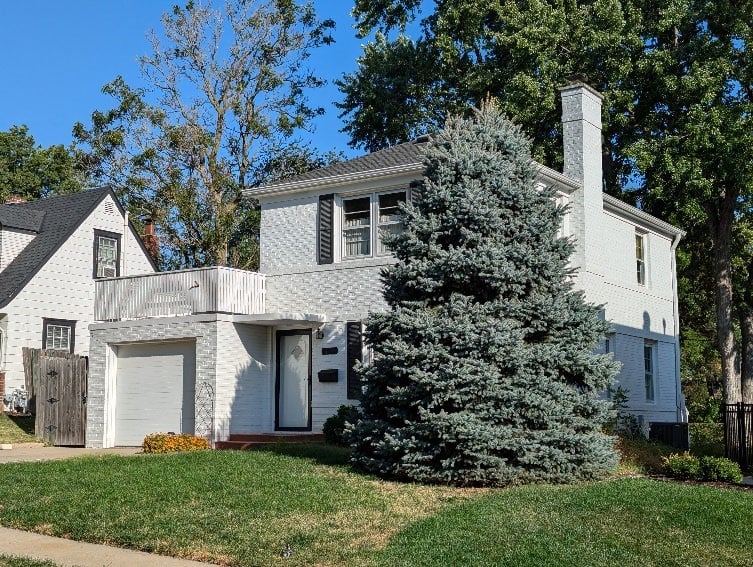
1730 Pawnee in 2024 (Post Oak).
(Published September 9, 2025)
For more information on the National Register program in Nebraska and more detail on these new listings, contact the Nebraska Historic Preservation Office at hn.hp@nebraska.gov or visit history.nebraska.gov/historic-preservation.