
The Gerald Ford Conservation Center Objects Lab recently completed treatment on a piece of contemporary sculpture that had a unique problem.
“Fish Wish” by artist Judy Onofrio is an assemblage sculpture made of materials including seashells, shards of ceramic dishware, bottle caps, plastic decorations, glass tesserae, and many other found objects. Though it was completed less than 30 years ago, some of the materials that the artist used aged in unexpected ways that required the intervention of a conservator.
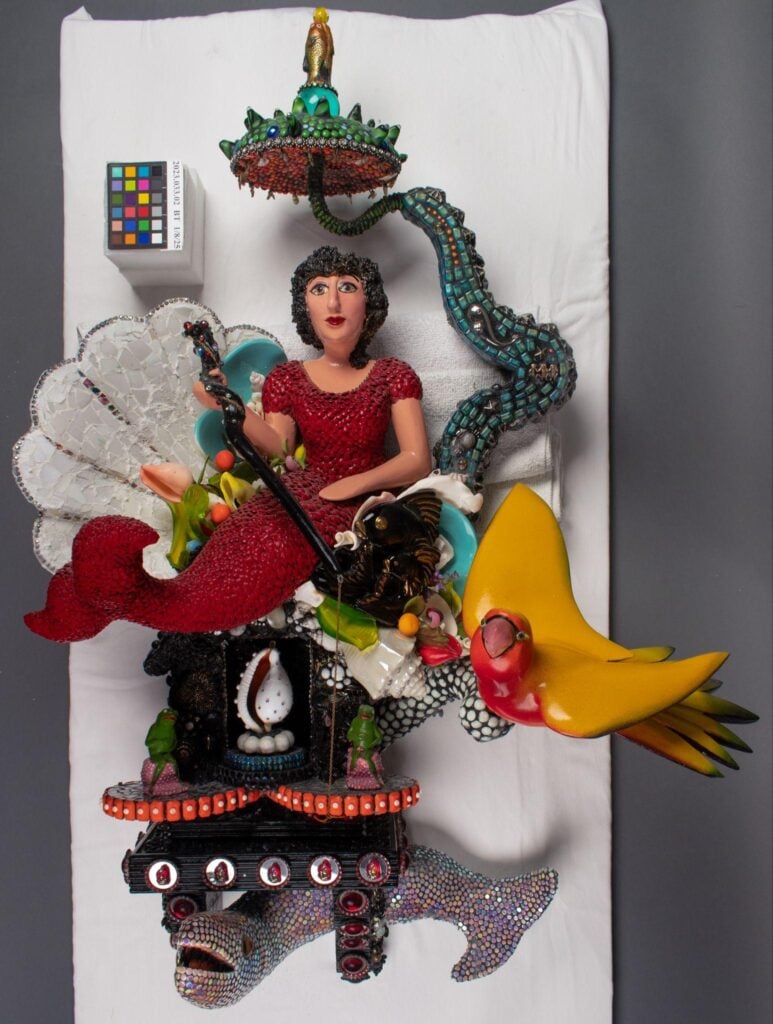
The piece before treatment, and the variety of materials and textures, are shown.
When the piece arrived at the Ford Center, different parts of the sculpture were covered in a fuzzy, powdery substance that ranged from white to dark gray in color. It was unclear whether this was mold or an efflorescence resulting from the degradation of the grout used to embed the glass and ceramic tesserae.
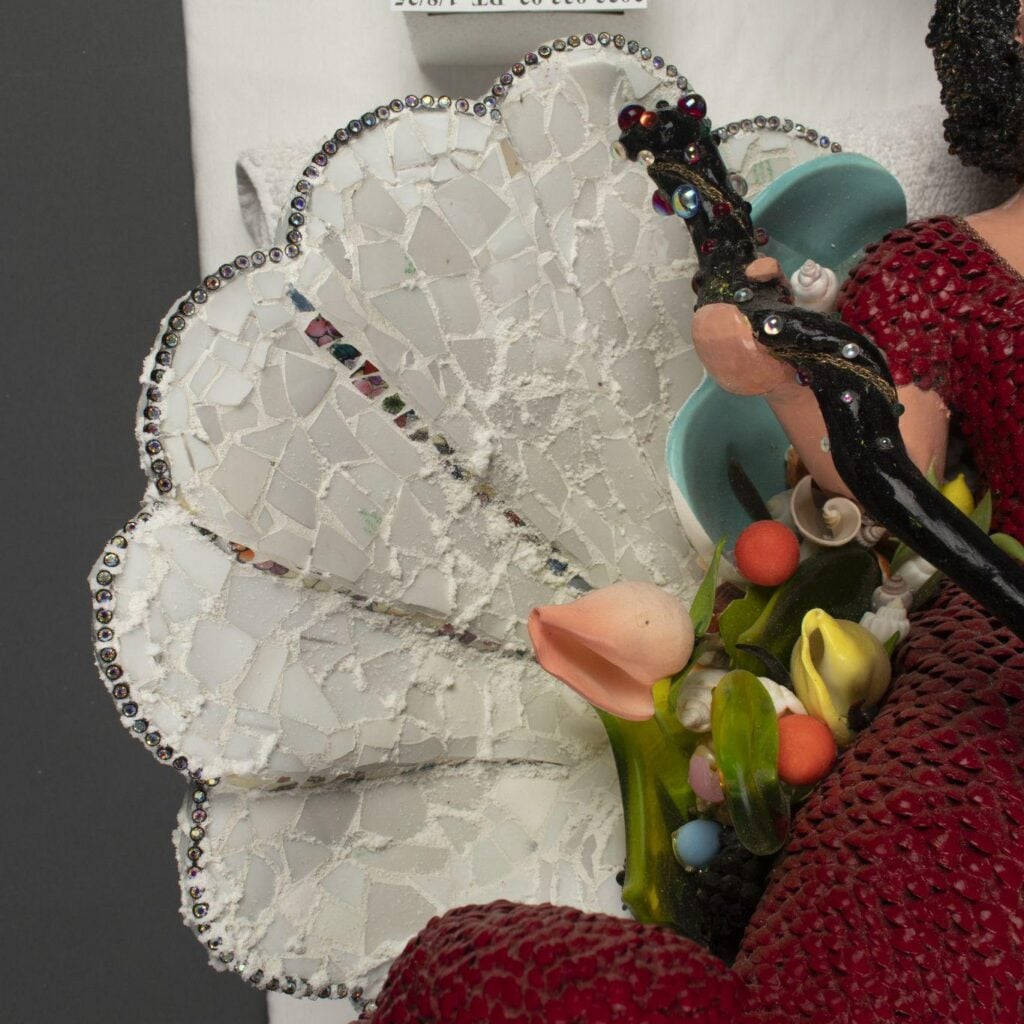
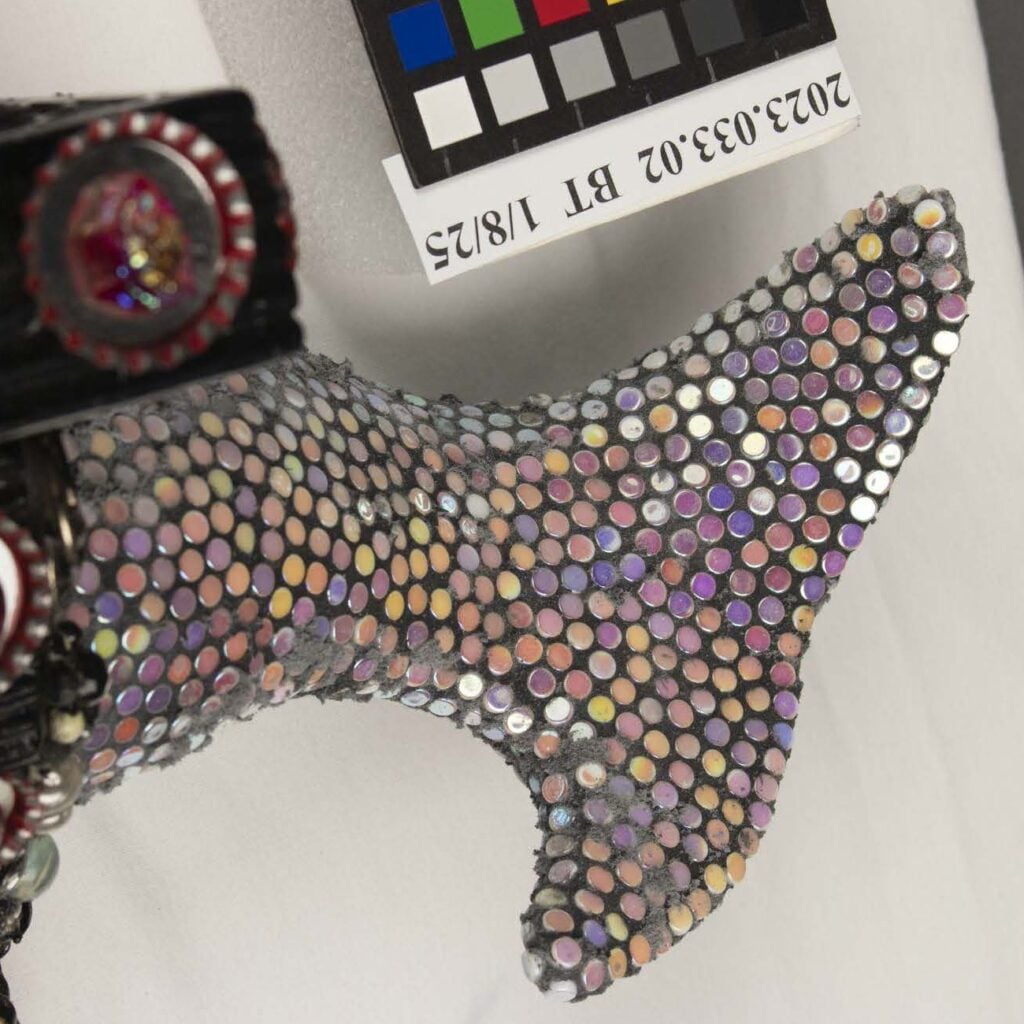
In these before-treatment images, the powdery material is visible on the surface of the large white shell and the eel’s tail.
Whenever possible, conservators try to make contact with the artist. Information about the materials and processes they use can be very helpful when analyzing the condition of a piece and determining possible steps for treatment. In this case, the artist (Judy Onofrio) provided valuable insight – this was not the first time a piece of hers had exhibited this issue.
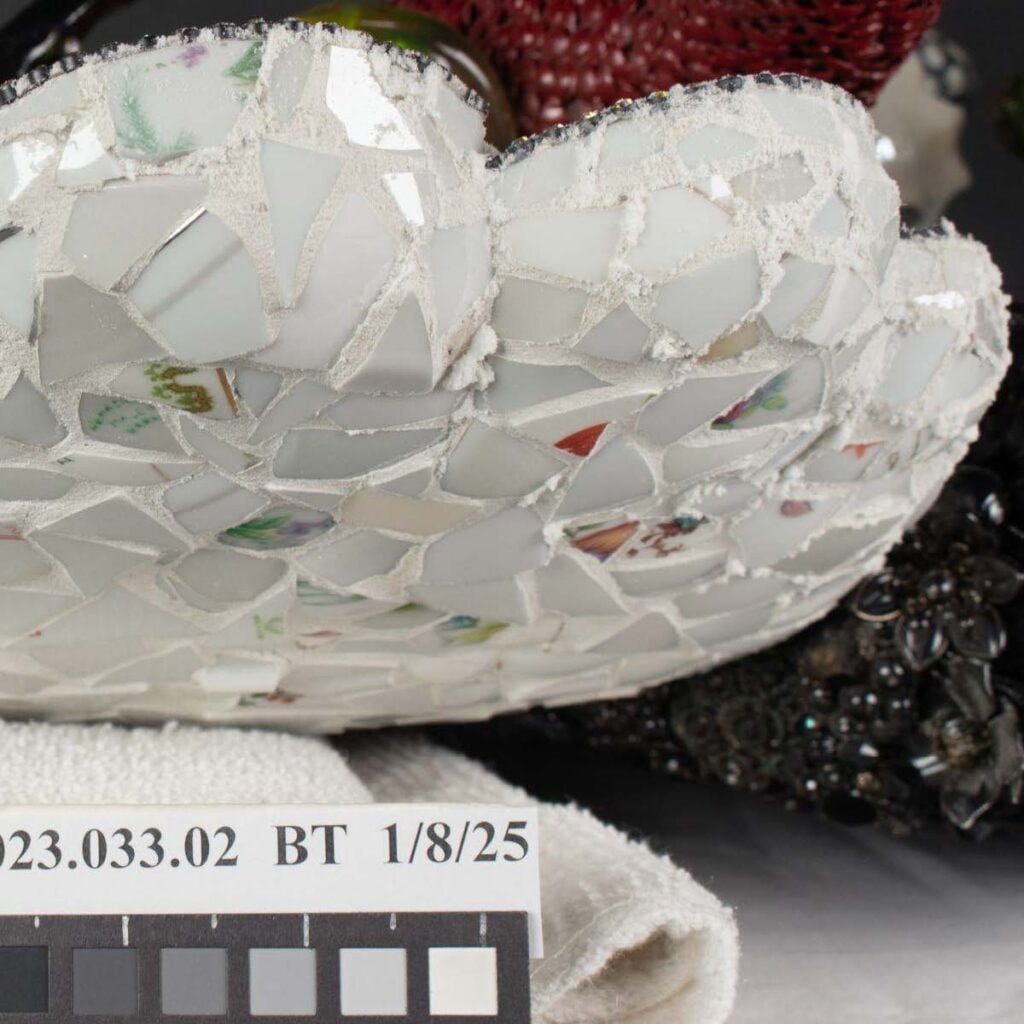
The irregular occurrences of mysterious powder are visible in the grouted areas between the ceramic pieces.
Onofrio had learned that the efflorescence was caused by a latex additive that she mixed into the grout. Over time, the latex additive reacted with its environment, turning the grout into a fine powder similar to the efflorescence that can be found on masonry. The artist shared that in her experience, applying an oil-based grout colorant to the surface of the work resolved the issue and returned the grout to its original appearance. This was useful information from the artist, but in this case, the grout was in such a fragile state that it would be necessary to apply a consolidant to the surface in addition to the colorant she suggested.
Our first step was to clean the piece, carefully brushing and vacuuming the powder away without disturbing any of the components of the artwork. In some areas, the grout was broken down so far that the tesserae had become detached from the substrate and were only loosely held in place by the powdery remnants.
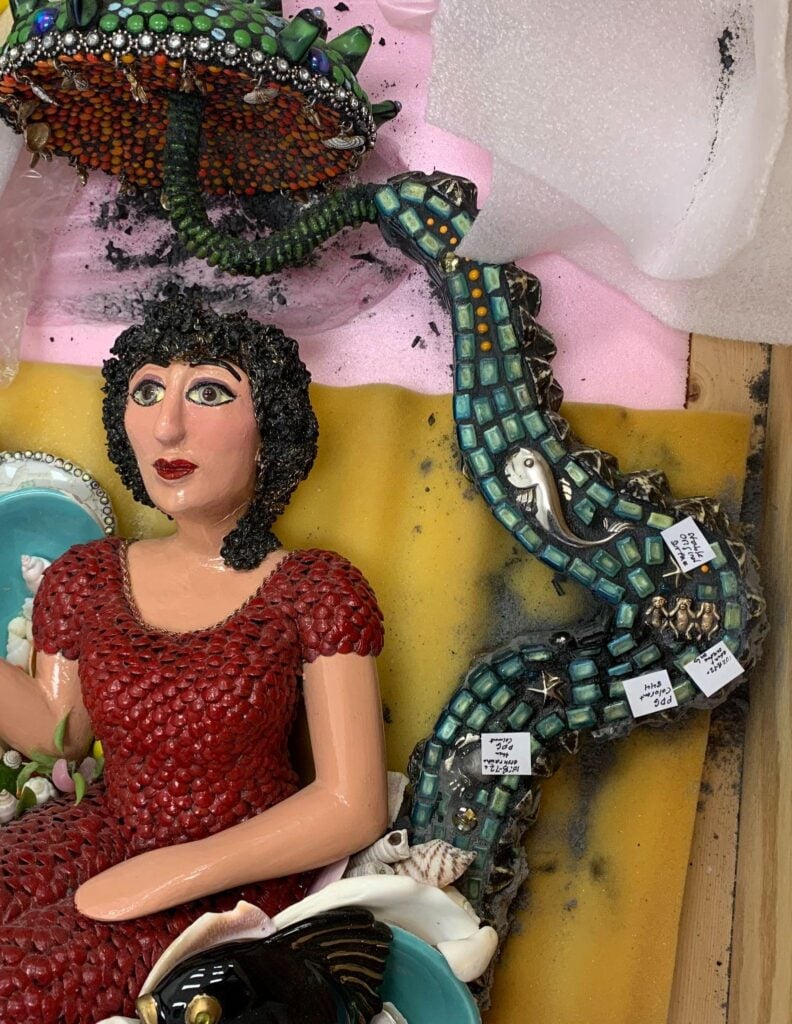
Small amounts of different consolidants and colorants were tested to determine the best course of treatment.
Next, a series of tests were done on small sections of the grout to determine the most effective combination of consolidant and colorant. Once done, the loose tesserae were reattached with a reversible adhesive, and losses to the grout were filled with acrylic spackle. Some areas of grout were then coated with the colorant the artist recommended, while other areas were coated with a similar colorant made in our lab using resin and pigment.
The final step involved a thorough cleaning of the tesserae to remove residual colorant and consolidant from treatment, and stuck-on grime that had accumulated over the years. This step was very time-consuming because of the sculpture’s unique shape. Some of the tesserae types had different tolerances for solvents, so some could easily be wiped clean with dampened swabs while others required careful mechanical removal with small tools.
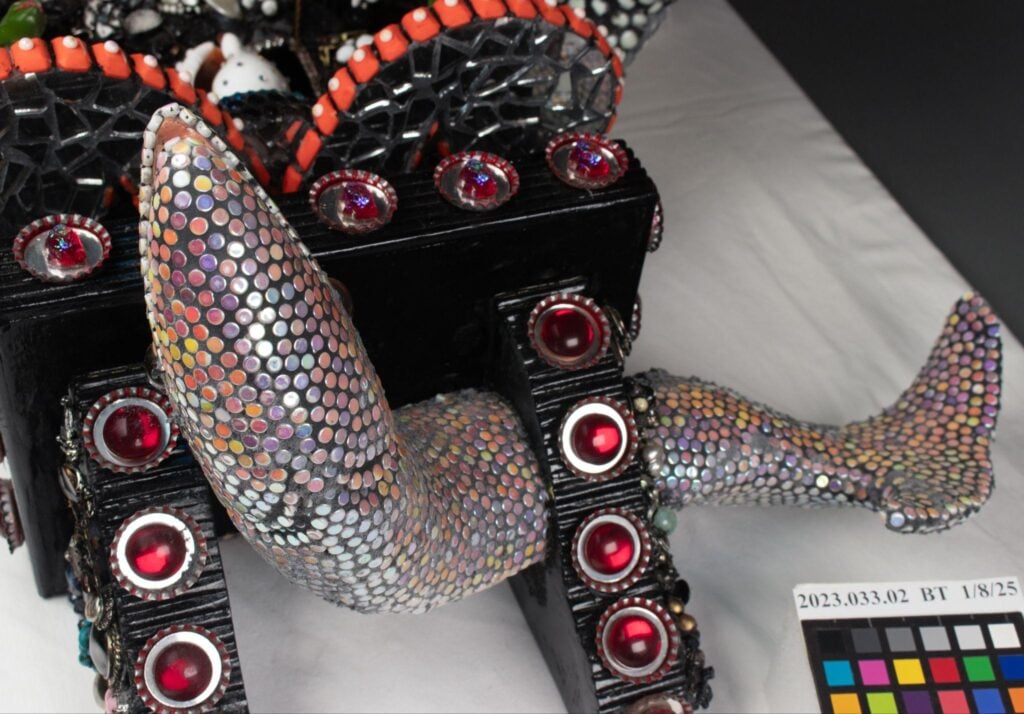
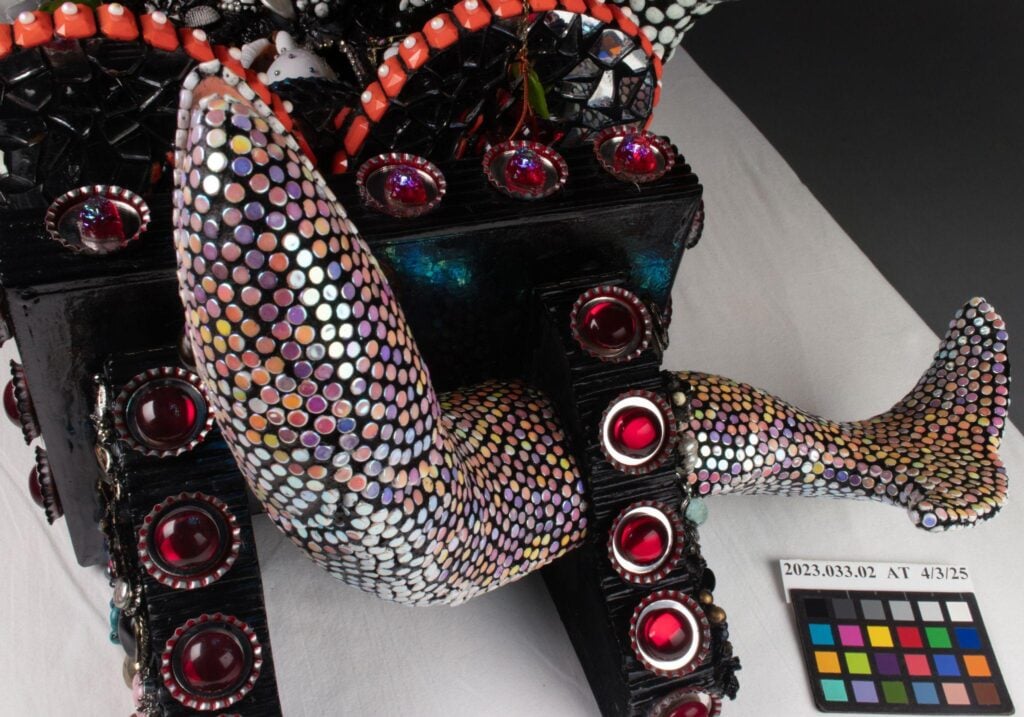
These images show the difference made by removing the efflorescence, consolidating the failing grout, applying a colorant, and then cleaning the tesserae.
Now that treatment is complete, the piece is more stable and more closely resembles its original appearance. It is not known whether the remaining latex additive in the grout will continue to degrade and cause efflorescence. However, now that this inherent issue is better understood, the piece can be displayed and monitored for further changes.
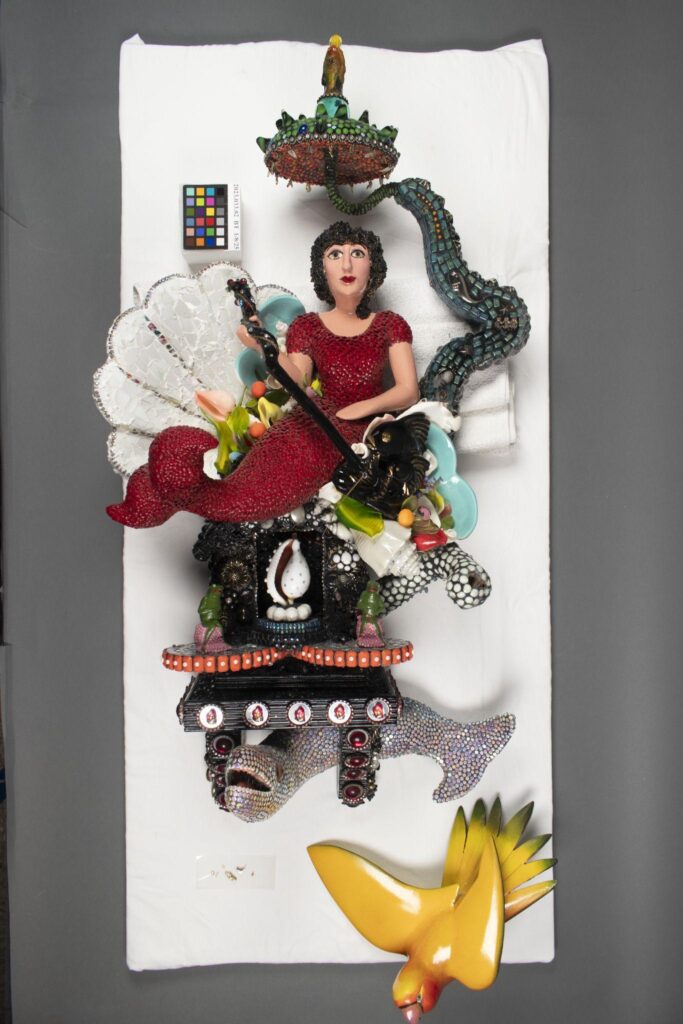
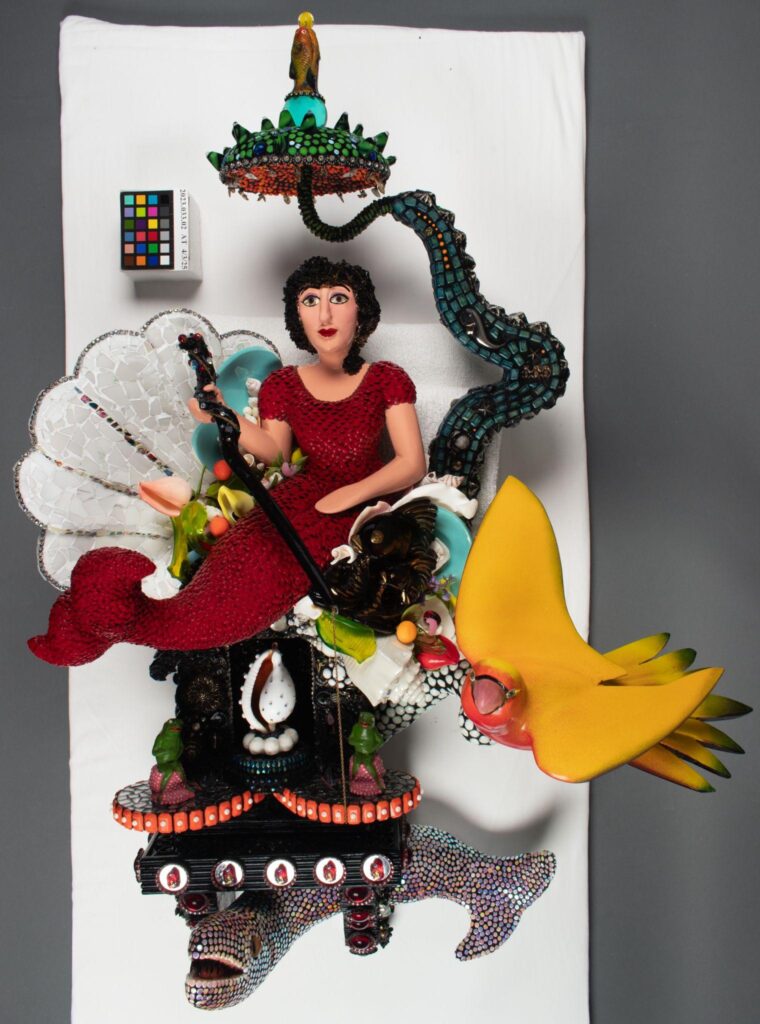
In these before-and-after-treatment photographs, the degradation products from the grout have been removed and fragile components stabilized. After a thorough cleaning, the piece more closely resembles what the artist intended.