Are you curious about Nebraska’s National Historic Landmarks and want to learn more about each site? Bookmark this page, download this keepsake map, and share your discoveries by tagging us on Facebook, Instagram, or X @nehistorical.
What are National Historic Landmarks?
National Historic Landmarks (NHLs) are historic properties designated by the Secretary of the Interior as being nationally significant. Acknowledged as among the nation’s most significant historic places, these buildings, sites, districts, structures, and objects possess exceptional value or quality in illustrating or interpreting the heritage of the United States in history, architecture, archeology, engineering, and culture.
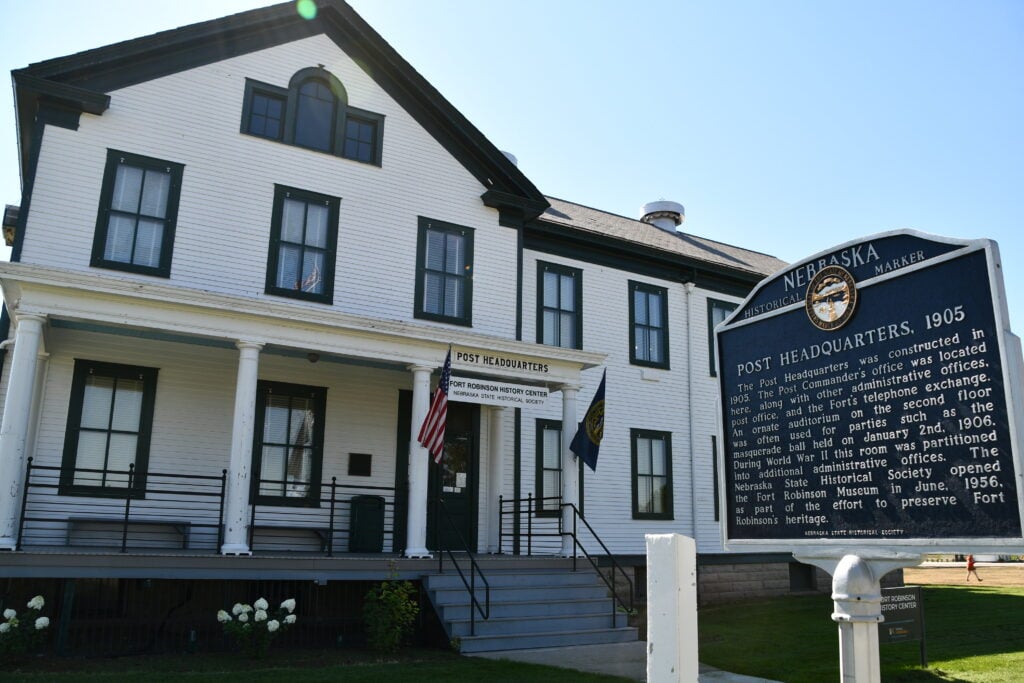
Fort Robinson and Red Cloud Agency
Native Americans, Indian agents, African-American Buffalo Soldiers, the K-9 Corps, German Prisoners of War—these are just some of the people whose lives intersected with Fort Robinson. The post began in 1874 as a temporary encampment during the Indian Wars to provide security for the Red Cloud Agency (1874-77) and the Sidney-Deadwood Trail. During this period, the post was the location of tragic events including the confinement of the Cheyenne and the death of Crazy Horse.
Over the following years, Fort Robinson continually expanded and became one of the largest military installations of the northern Plains. Beyond the frontier period, the fort was used by the U.S. Army through World War II until it was abandoned in 1947 and transferred to the United States Department of Agriculture for use as a beef research station. The Nebraska State Historical Society established a museum in 1955. About the same time, Fort Robinson State Park was created in the old post area before the remaining area was transferred to the State of Nebraska for public use in the 1970s.
- Location: Soldier Creek Rd & US Hwy 20, Crawford, NE
- Declared an NHL in 1960
- To visit: A Nebraska Game and Parks permit is required to enter Fort Robinson State Park. Most park attractions and lodgings are open seasonally. For hours and further information, click here. The Fort Robinson History Center, operated by the Nebraska State Historical Society, is also open seasonally.
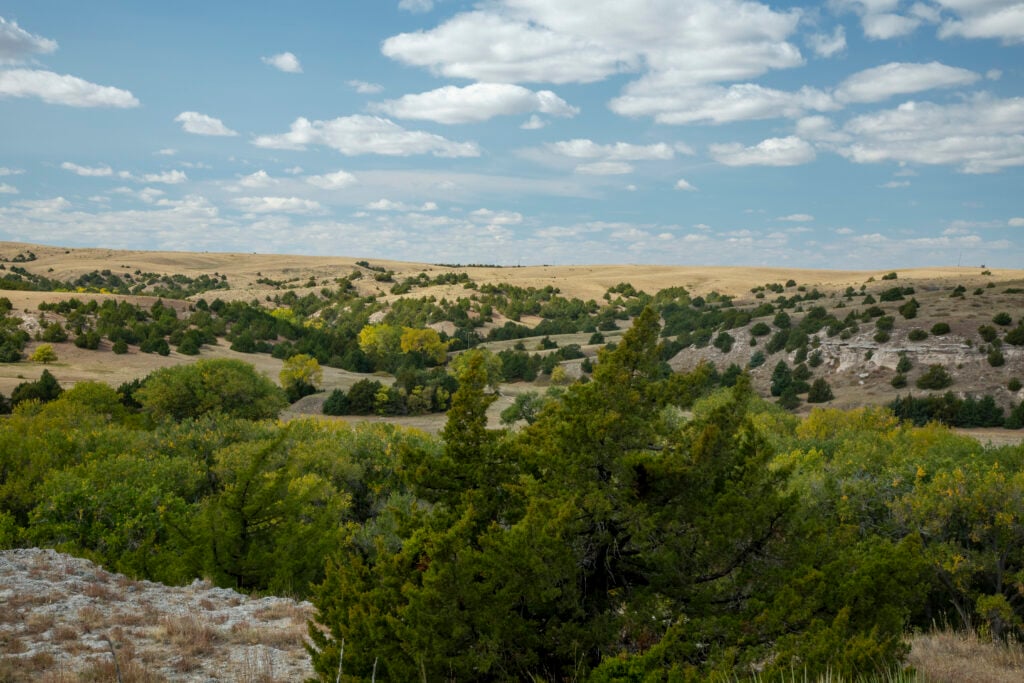
Ash Hollow Cave
Located within Ash Hollow State Park, the cave is one of the most important Indigenous archeological sites on the High Plains. This prominent rockshelter (not a true cave) was excavated by the Nebraska State Historical Society in 1939. The shelter contains the stratified layers of multiple camps dating from over 2,000 years ago. The later occupations were by ancestors of the Pawnee and Apache. The investigation, in part, laid the groundwork for establishing the sequence of pre-Euroamerican contact Indigenous groups living in western Nebraska. A building was constructed over the excavations when the park was developed and visitors can walk down into the shelter and see many of the recovered artifacts.
- Location: 4265 HWY 26, Lewellen, NE
- Declared an NHL in 1964
- To visit: Ash Hollow Cave is located in Ash Hollow State Park. A Nebraska Game and Parks permit is required to enter. Click here for more information.
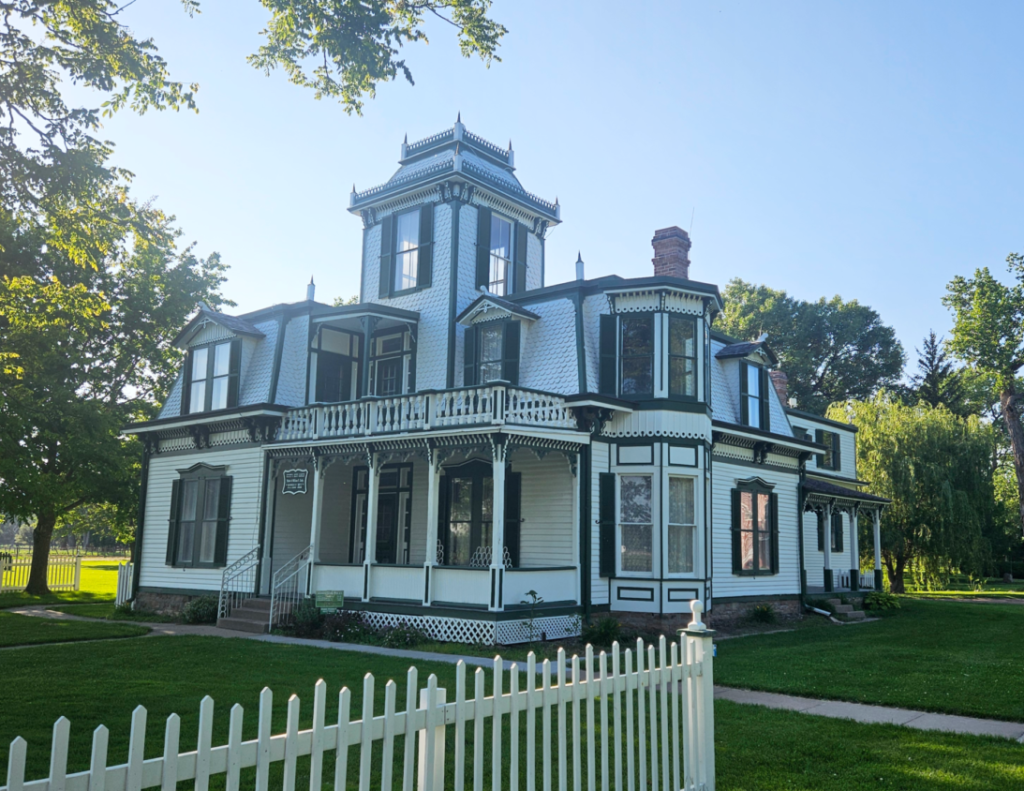
Scout’s Rest Ranch
Scout’s Rest was built as the primary home of frontiersman and showman William F. “Buffalo Bill” Cody in 1886, a place to relax between his “Wild West” exhibition show tours. Once stretching across 4,000 acres, the ranch headquarters entertained in elaborate style Cody’s famous contemporaries and old friends, as well as served as abundant grounds for purebred cattle and thoroughbred horses.
- Location: 2921 Scouts Rest Ranch Rd, North Platte, NE
- Declared an NHL in 2021
- To visit: Scout’s Rest Ranch is operated by Nebraska Game and Parks, a park permit is required. Click here for more information.
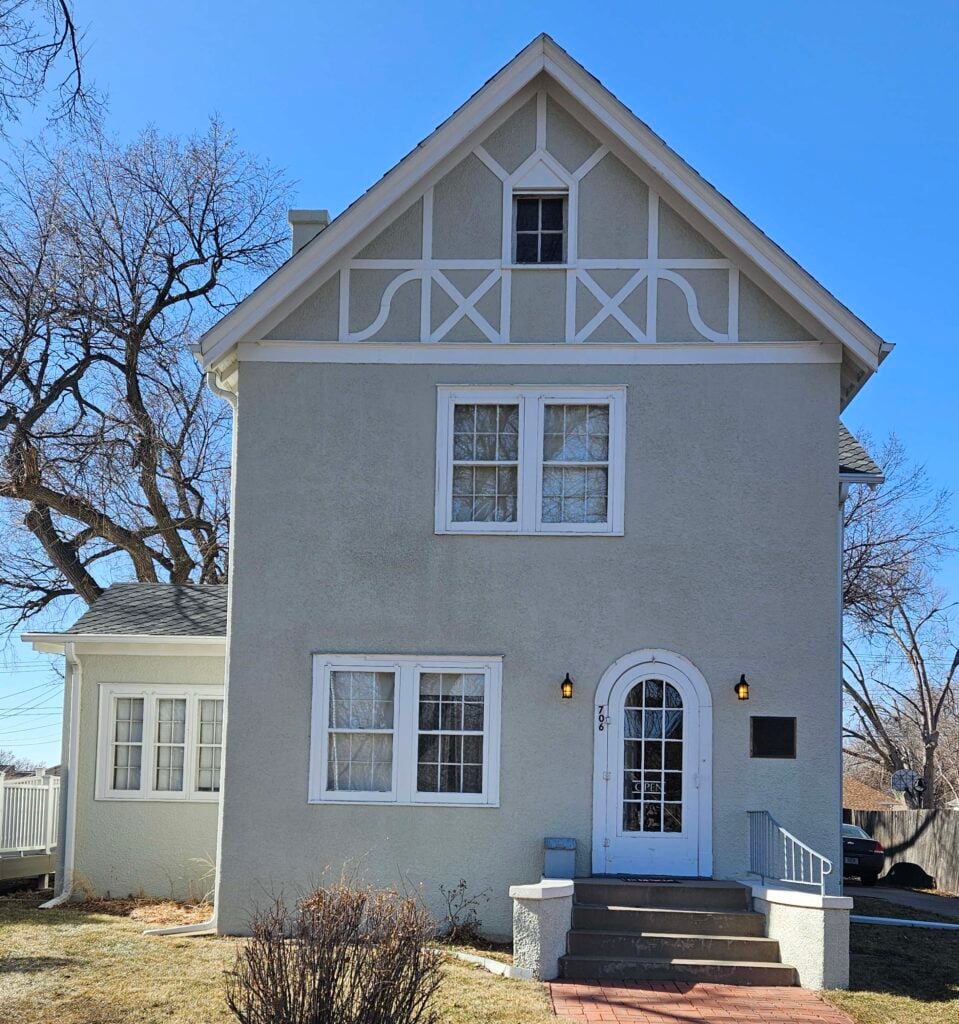
Senator George W. Norris House
From 1902 until his death in 1944, this two-story house was the home of George W. Norris (1861-1944). Norris served in the U.S. House (1903-13) and Senate (1913-43), and was a key supporter of the establishment of the Tennessee Valley Authority, a proponent of the Nebraska Unicameral Legislature, and a sponsor of the Rural Electrification Act.
- Location: 706 Norris Avenue, McCook, NE
- Declared an NHL in 1967
- To visit: The Senator George Norris State Historic Site is operated by the Nebraska State Historical Society. Admission is free. Click here for more information.
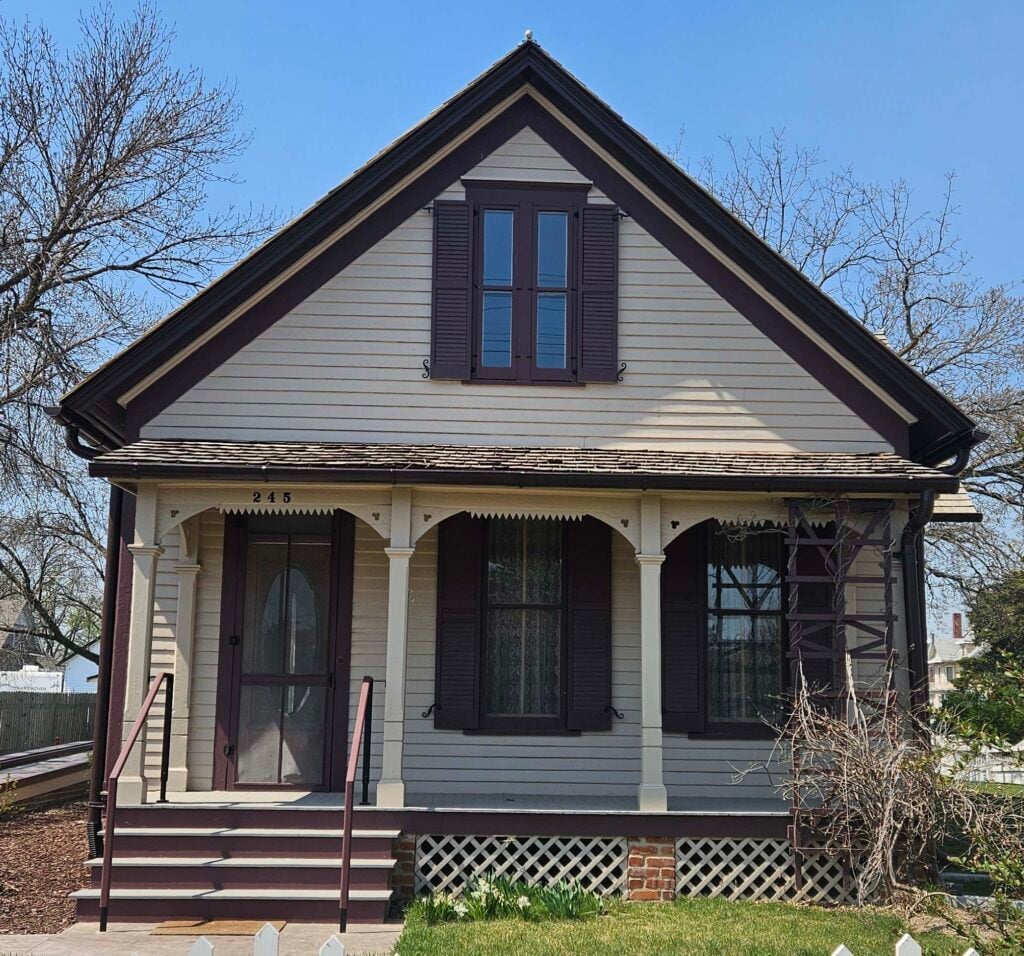
Willa Cather Childhood Home
From 1884 to 1890, this was the home of Willa Cather (1876-1947), an author who captured the pioneer spirit of the West and Southwest as few other writers have. Her works, local in scope and national in significance, include such favorites as “O Pioneers!”, “My Antonia”, and “Death Comes for the Archbishop.” Cather once recalled that the “years from eight to fifteen are the formative period in a writer’s life.” These were the years when she lived in Red Cloud.
- Location: 245 N Cedar St, Red Cloud, NE.
- Declared an NHL in 1971
- To visit: Operated by the National Willa Cather Center, guided tours of the home are available. Click here for further information.
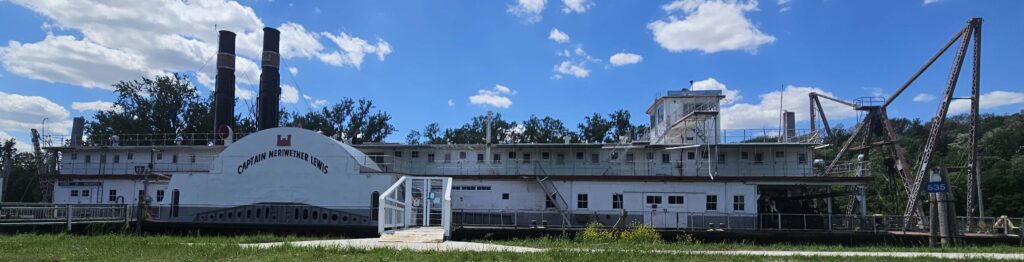
Captain Meriwether Lewis (Dredge)
One of only a handful of surviving U.S. Army Corps of Engineers vessels built to control the Nation’s inland waters, the Captain Meriwether Lewis (1932) is one of the best preserved examples of an inland waters cutterhead dredge in the United States.
- Location: 1 E Water St, Brownville, NE.
- Declared an NHL in 1989
- To visit: Open for in-person tours seasonally. Click here for more information and to explore the dredge virtually.
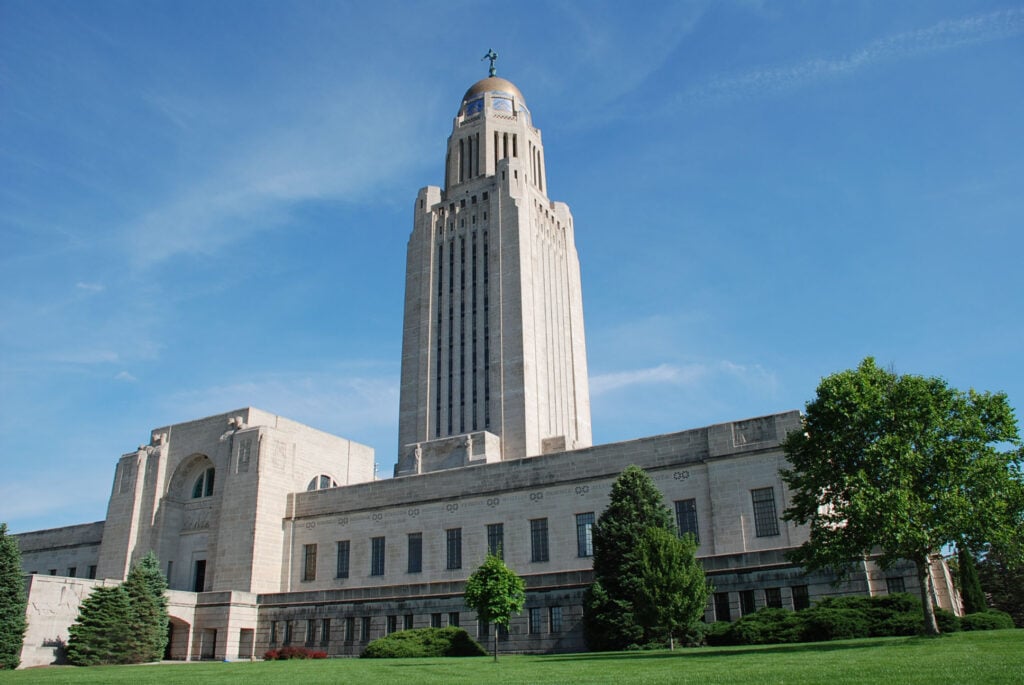
Nebraska State Capitol
An architectural masterpiece, the Nebraska State Capitol is a testament to architect Bertram Grosvenor Goodhue’s skill and the craftsmanship of all those involved in its decade-long construction, 1922-1932. Described as the nation’s first truly vernacular State Capitol, the 400-foot tower is lined with carvings by artist Lee Lawrie and inscriptions written by philosopher Hartley B. Alexander, inside and out, that represent historic events in the evolution of democracy as a form of government. The interior features mosaics and murals by artist Hildreth Meière, which depict the natural and social history of Nebraska’s people.
- Location: 1445 K St, Lincoln, NE
- Declared an NHL in 1976
- To visit: Open for free guided tours reguarly, except some holidays. Click here for further information.
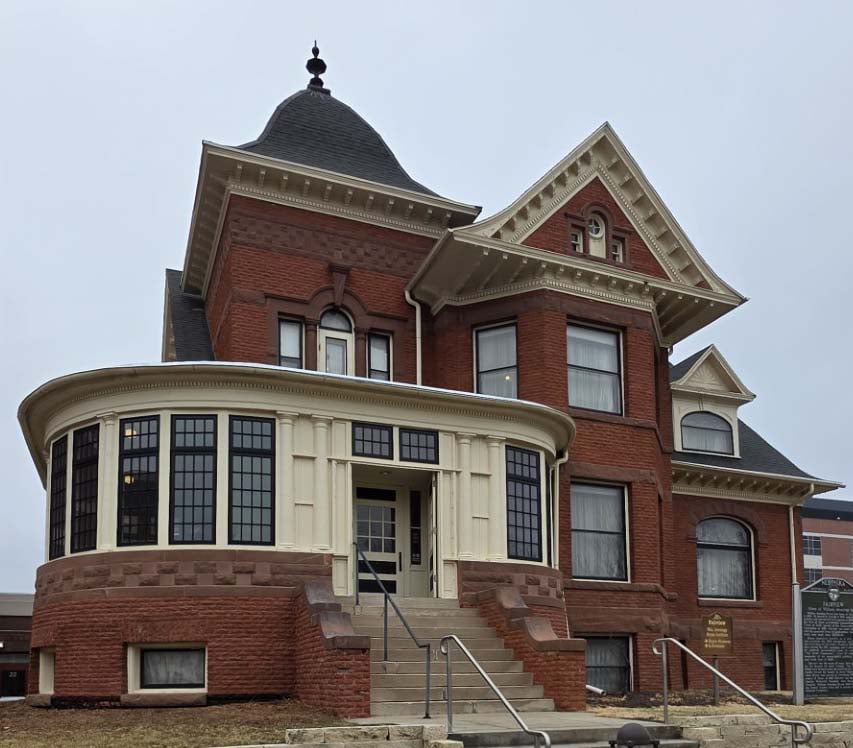
William Jennings Bryan House
From 1902 to 1922, Fairview was the home of William Jennings Bryan (1860-1925), lawyer and politician. Bryan won the Democratic Presidential nomination in 1896 as the youngest presidential candiate at the age of 36 and again in 1900 and 1908. Later, he served as Secretary of State under President Wilson (1913-15).
- Location: 4900 Sumner St., Lincoln, Nebraska.
- Declared an NHL in 1963
- To visit: By appointment only. Click here for more information.
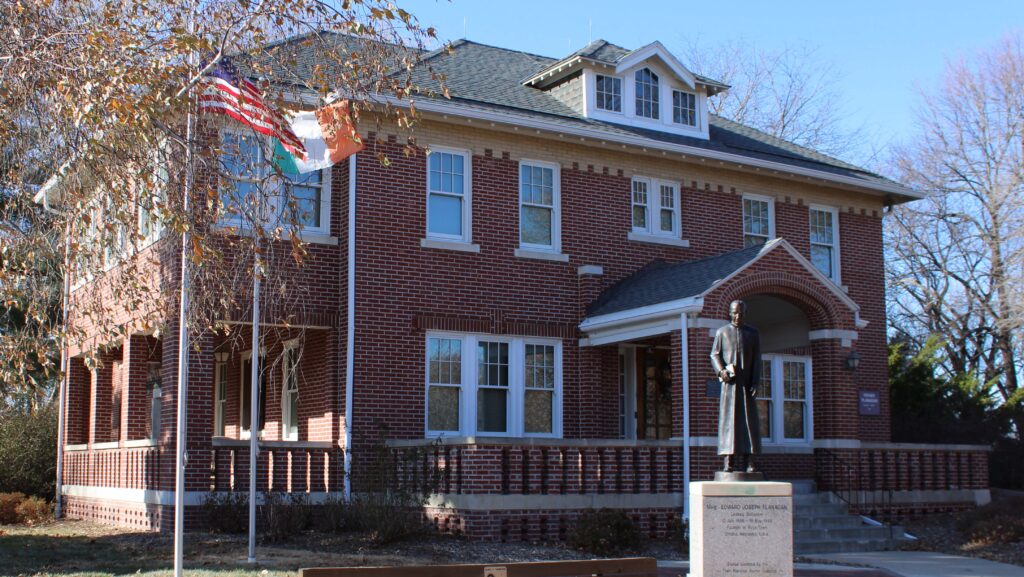
Father Flanagan’s Boys’ Home
In 1921, Father Edward Joseph Flanagan (1886-1948) established his home as an orphanage for boys on a farm outside Omaha. This “City of Little Men” led the development of new juvenile care methods in 20th-century America, emphasizing social preparation in what has become a recognized prototype for public boys’ homes worldwide.
- Location: 14153 Grodinsky Cir, Boys Town, NE (Omaha)
- Declared an NHL in 1985
- To visit: For hours and further information, click here.
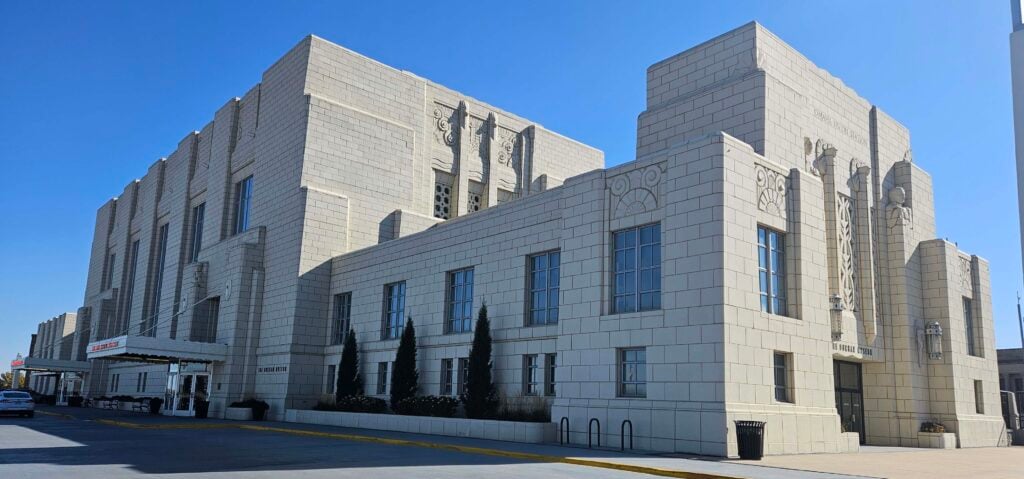
Omaha Union Station
Now known as the Durham Museum, Omaha’s Union Station first opened in January 1931 to become one of the busiest train stations in the nation. In 1973, the station was donated to the City of Omaha by the Union Pacific Corp. In 1975, the Union Station became home to The Western Heritage Museum, renamed the Durham Museum in 1995, after the leadership of Chuck and Margre Durham.
- Location: 801 S 10th St, Omaha, NE
- Declared an NHL in 2016
- To visit: The Durham Museum operates seasonally, with extended summer hours. Click here for more information.
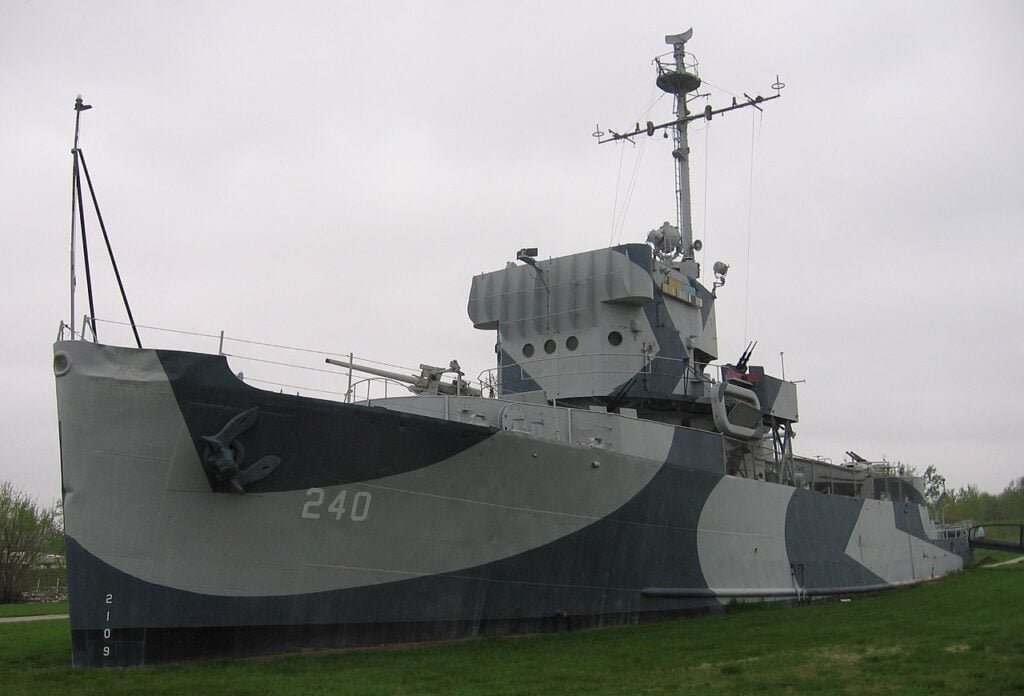
USS Hazard
The last surviving Admirable-class minesweepers, the USS Hazard (1944) was fitted for both wire and acoustic sweeping and could double as an anti-submarine warfare and anti-aircraft ship. The USS Hazard first served escorting a convoy from San Francisco to Pearl Harbor, and then ran with convoys to Eniwetok and Ulithi. In March 1945, she was sent to Okinawa, where she first performed anti-submarine patrol before sweeping the area off Kerama Retto in keeping with the minesweeper’s slogan, “No Sweep, No Invasion.”
The USS Hazard was decommissioned in 1946, then purchased in 1971 by a group of Omaha businessmen and placed on display in Freedom Park.
- Location: Freedom Park, 2497 Freedom Park Rd., Omaha, NE
- Declared an NHL in 1986
- To visit: Freedom Park is open seasonally, exclusively on Saturdays. Click here for further information.
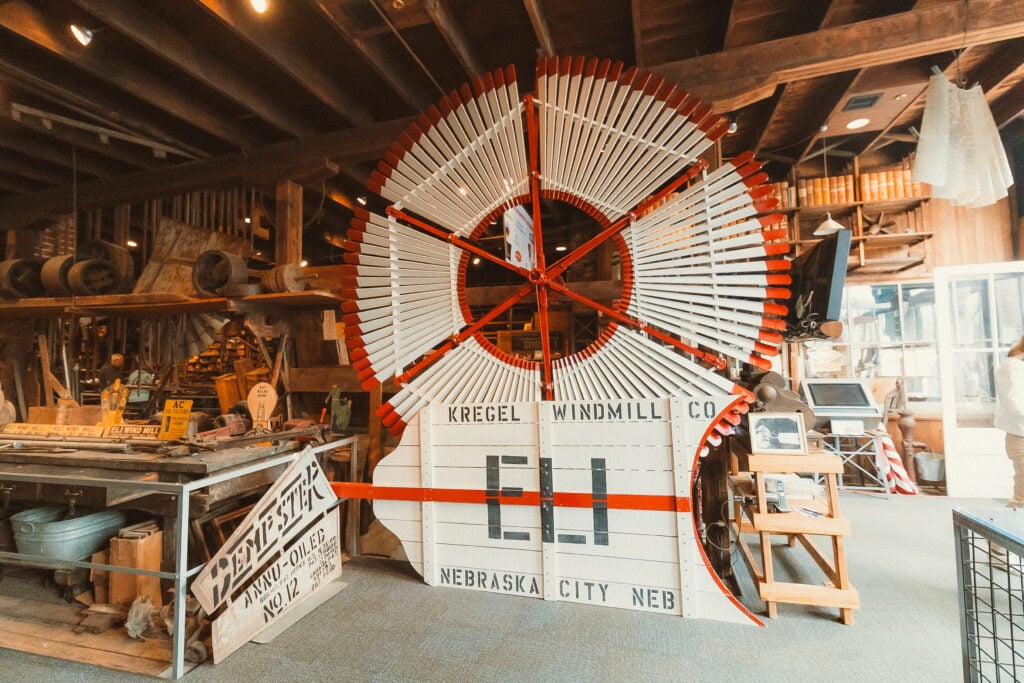
Kregel Windmill Company Factory
The Kregel Windmill Company Factory is the last intact historical windmill factory in the United States, containing original wood and metal machinery, tools, and supplies. Constructed in 1902, the factory illustrates national patterns in windmill manufacturing from the industry’s peak in the early 1900s, decline between the world wars, and closures in the 1940s.
- Location: 1416 Central Ave, Nebraska City, NE
- Declared an NHL in 2024
- To visit: For hours and further information, click here.
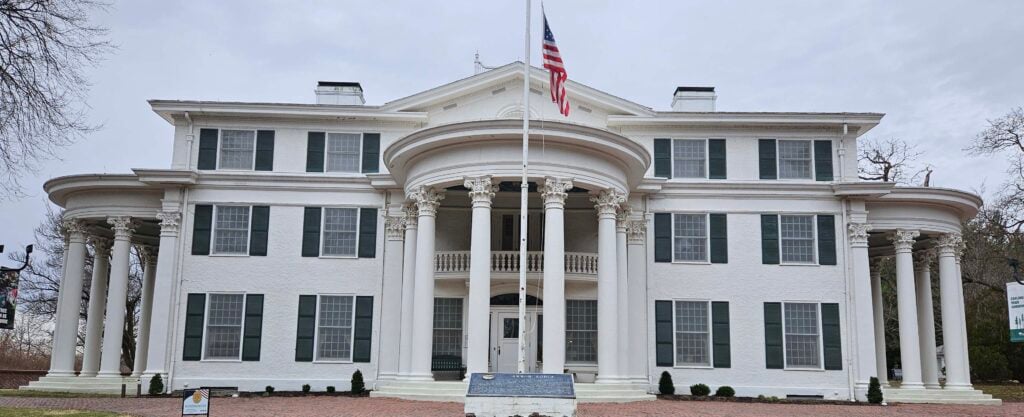
J. Sterling Morton Arbor Lodge Mansion
The 52-room mansion began as the modest 4-room home of J. Sterling Morton, founder of Arbor Day and Secretary of Agriculture in the 1890s. In years to come, the house was remodeled seven times, evolving in style as it grew in size. After Morton’s death, a major addition by Joy Morton, son of J. Sterling and founder of Morton Salt, more than doubled its size and further altered its appearance. Surrounding the mansion are 270 varieties of trees and shrubs. In 1923, the Morton family donated the house to the State of Nebraska.
- Location: 2600 Arbor Ave, Nebraska City, NE
- Declared an NHL in 1975
- To visit: The Arbor Lodge Mansion is located in Arbor Lodge State Historical Park. A Nebraska Game and Parks permit is required to enter. Click here for more information.
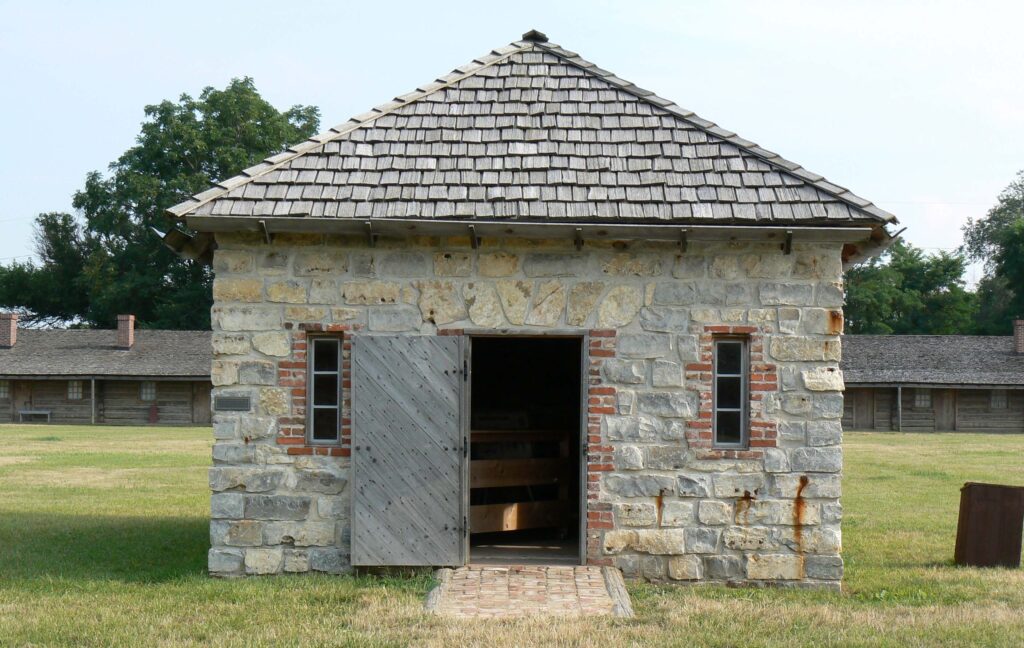
Fort Atkinson
Established in 1820 at the recommendation of the Lewis and Clark Expedition, Fort Atkinson is one of the earliest U.S. military forts west of the Missouri River and was a site for river traffic, Native American relations, and early fur trade. It remained active until 1827, when military efforts were realigned to the south. The historic fort was reconstructed beginning in the 1960s, becoming a 20-year effort to restore the area.
- Location: 201 S 7th St, Fort Calhoun, NE
- Declared an NHL in 1961
- To visit: Fort Atkinson State Historical Park is operated by Nebraska Game and Parks, a park permit is required. Click here for more information.
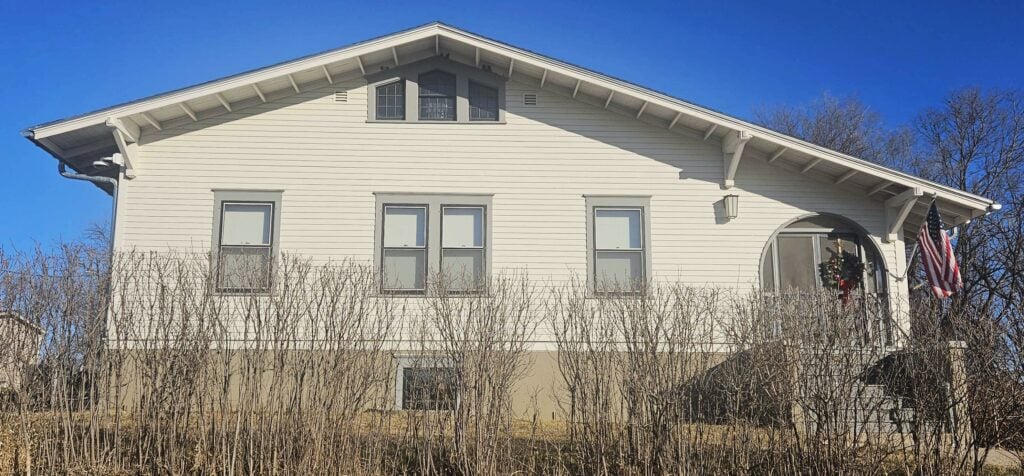
Dr. Susan La Flesche Picotte Memorial Hospital
This hospital was built in 1912 by Dr. Susan La Flesche Picotte (1865-1915), the first Native American physician, who pioneered in providing health care for Native Americans. Picotte was born on the Omaha Reservation, the youngest child of Chief Joseph LaFlesche (Iron Eye). Picotte received her medical degree from the Women’s Medical College of Pennsylvania. She returned to the Omaha Reservation in 1890 and ultimately became a physician for the entire tribe, serving as well as a teacher, social worker, advisor, and interpreter.
- Location: 503 Matthewson St, Walthill, NE
- Declared an NHL in 1993
- To visit: The Picotte Center is open seasonally. For hours and further information, click here.
(Published May 1, 2026)