The Ford Center has welcomed a new Paintings Conservator with 20 years of experience in the field.
Melissa Gardner joined the conservation team in April and has already worked on a host of projects from private clients, museums around the region, and the Nebraska State Historical Society’s own collections.
She was drawn to the new role for the opportunity to focus on hands-on treatment. While she loved her previous post at the Saint Louis Art Museum, she said the collection was in such great shape that it didn’t need much conservation.
“In my first three months at the Ford Center, I treated more paintings than I did in five years in St. Louis,” said Gardner. “I wanted to touch paintings again. That’s why I got into the field.”
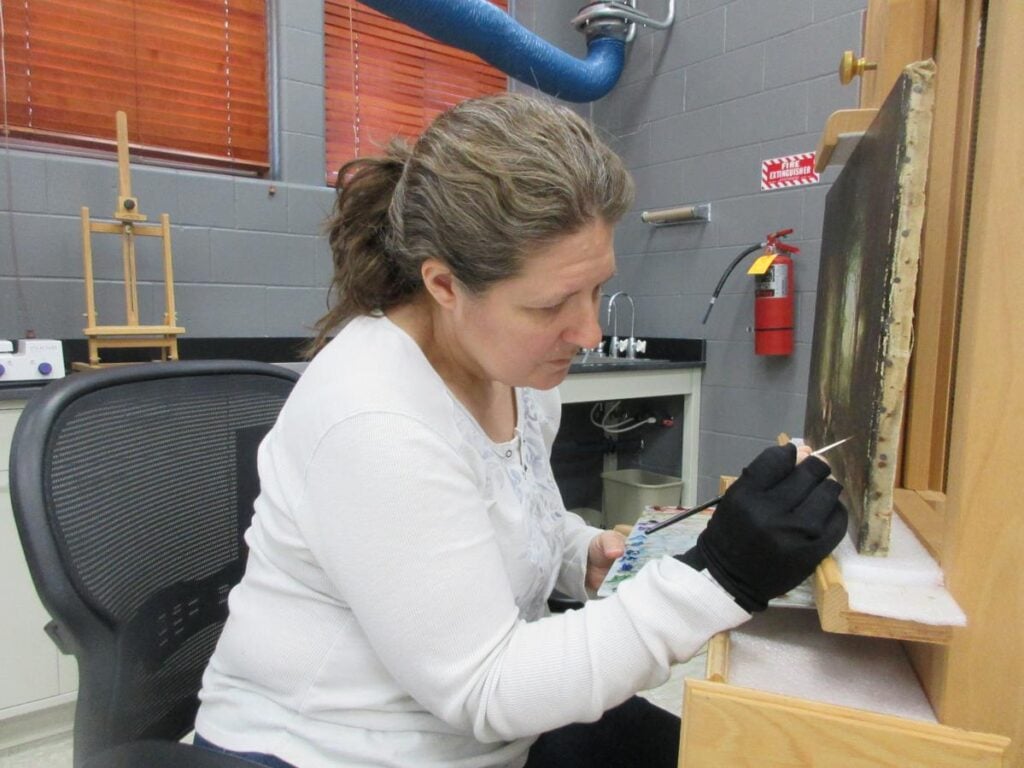
Melissa Gardner is the Ford Center’s new paintings conservator. Based at the conservation center in Omaha, she stabilizes and repairs paintings made using a variety of media and supports — from acrylics to oils, canvas to metal, and more.
Originally from Texas, Gardner was a paintings major in college. She fell in love with art history but didn’t want to be a professional artist or a teacher. As she researched potential career paths, she chanced upon an online exchange between two conservators discussing how to re-line a damaged canvas. She was instantly fascinated, drawn to both the artistic and scientific aspects of the field.
“I had never even heard of conservation, but I knew immediately it was what I wanted to do,” she said.
Gardner went on to study conservation and art history at New York University, specializing in paintings and earning two master’s degrees.
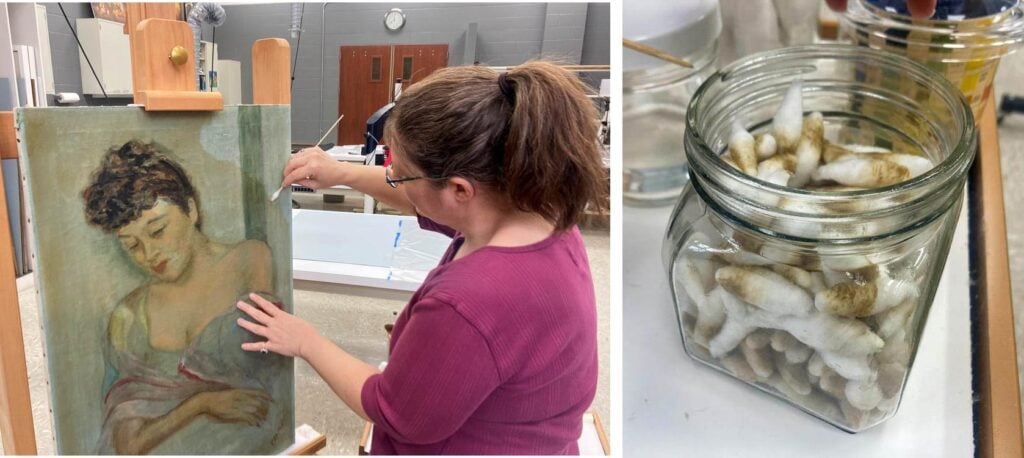
Gardner cleans an early 20th century portrait of Kitty Arno. In addition to removing dirt and grime, this treatment included flattening a large distortion in the canvas and replacing an old, discolored varnish.
During her graduate studies, Gardner interned at the Uffizi Galleries in Florence, Italy, where she worked on the self-portrait collection in the Vasari Corridor. She also treated frescoes at a historic villa in Italy and contributed to an archaeological excavation at Samothrace, Greece.
“Working in Europe was an avenue to learn a lot of different techniques, especially with approaches to using chemicals,” she said. “There are so many different mindsets, different philosophies, different ways to get to a certain outcome in a treatment. I was exposed to so much and able to bring that back here.”
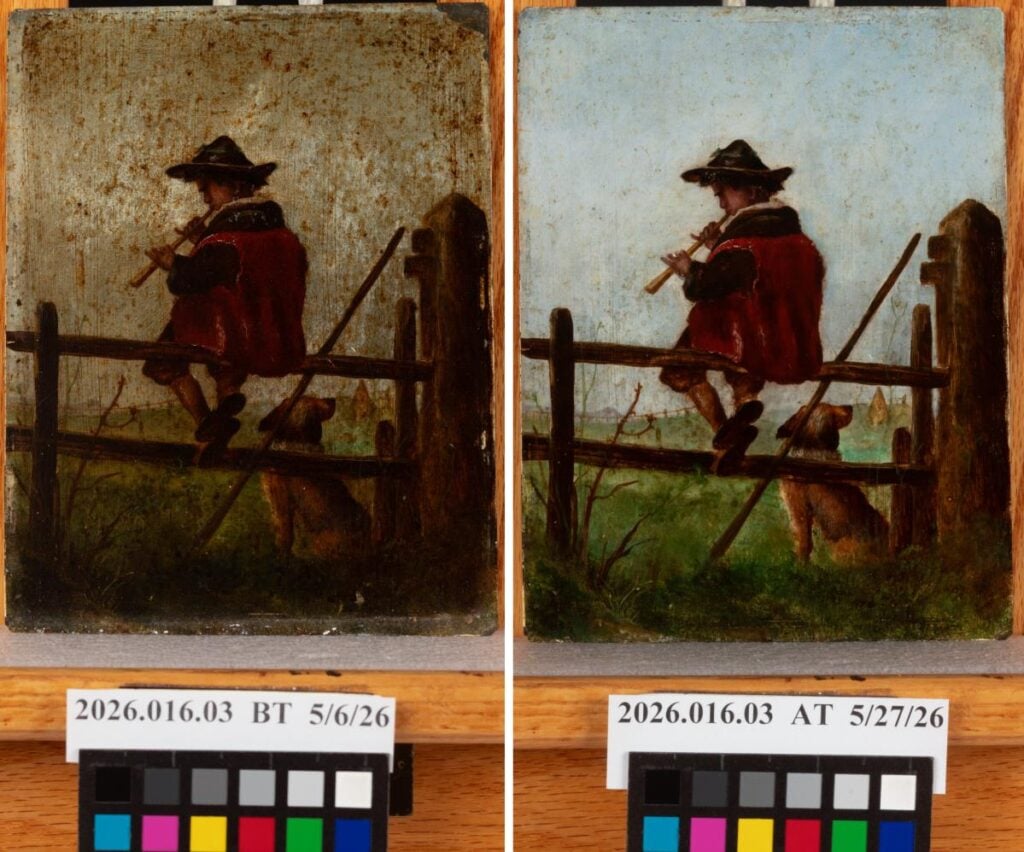
Gardner recently completed treatment on this 19th century oil painting on metal, shown here in before- and after-treatment images. “The metal ions interact with the varnish differently than other supports, which caused the stubborn staining,” she said.
After a brief time at the National Gallery in Washington, D.C., Gardner spent more than 11 years at the Museum of Fine Arts, Houston, and five years at the Saint Louis Art Museum. In that time, she gained experience treating everything from a tempera funerary portrait dated to 3000 BCE to contemporary works using every available option in the “vast craziness of modern paints.”
Some of her favorite treatments have been on works by the European Old Masters. “Traditional materials are my first love — oil on canvas, oil on panel,” she said.
Now settled at the Ford Center in Omaha, Gardner said she’s enjoying the chance to conserve paintings of all kinds, with a wide variety of treatment needs.
“Inpainting is a joy, but I also love the problem-solving and the chemistry involved in cleaning and so forth,” she said. “I just love weeding through the huge toolbox of options to determine the right materials and techniques for a given work.”
Contact the Ford Conservation Center at hn.fordcenter@nebraska.gov or (402) 595-1180.
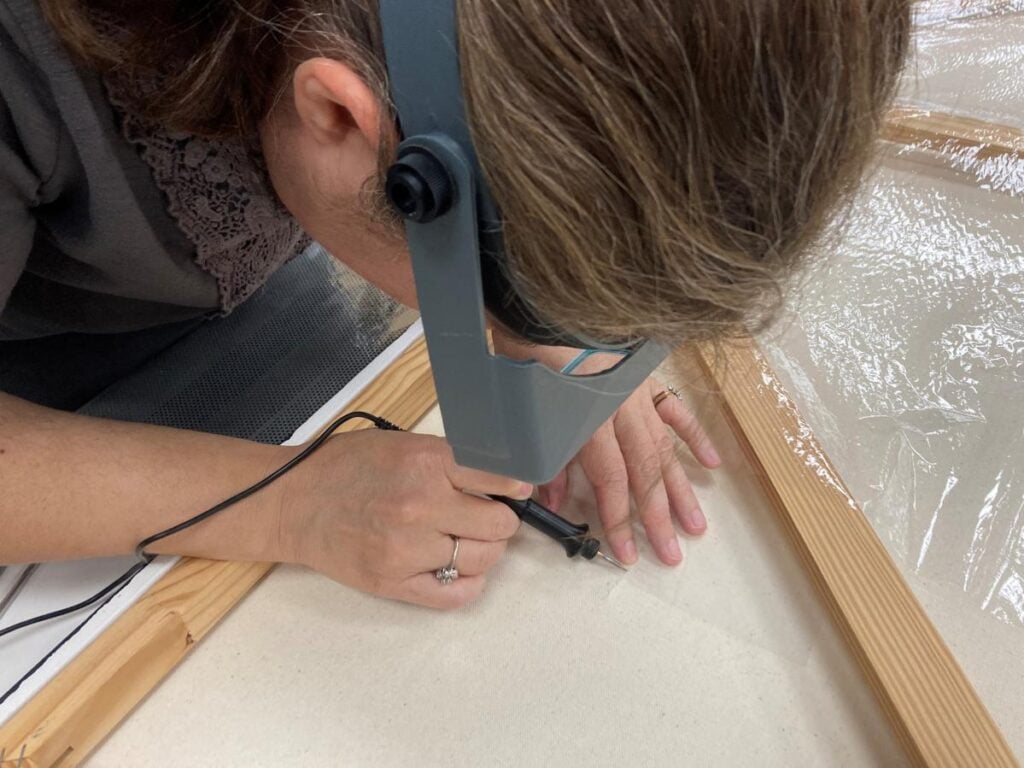
Gardner mends a tear in the canvas of an acrylic painting from the back side.