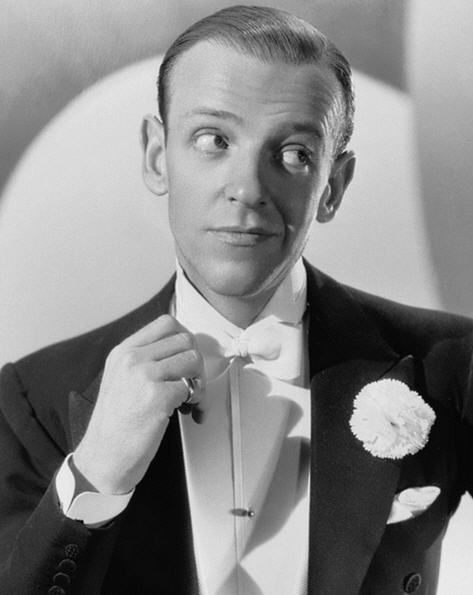
 The year 1999 marks the centenary of Fred Astaire’s birth in Omaha, where he was born as Frederick Austerlitz on May 10. His sister, Adele, two years older than Fred, first took dance lessons at the Chambers Dance Academy on West Farnam. Although Fred did not officially take lessons there, legend has it that when he was four years old, in imitation of Adele and the other students, Fred slipped on ballet slippers and mirrored their steps. Recognizing the talent of her children, Mrs. Austerlitz took them to New York for additional training and, gradually, performances. By the time Fred was seven and Adele was nine, and as the newly named Astaires, they had an act which billed them as Juvenile Artists.
The Astaire homecoming in 1908, as part of a troupe playing the Orpheum Theatre, was met with universal acclaim by the local newspapers. These write-ups are the earliest known critiques of their on-stage appearance in Nebraska. The Omaha Daily News of December 7, 1908, provided front page coverage of their successful performance:
“Two children, Fred and Adele Astaire, will shine this week as the brightest and biggest luminaries on the Orpheum stage. The fact that they are little makes their work look all the bigger, but they stand upon their merit, and if they were not Omaha children they would command the attention of the critics for their work is superior.
“They are toe, clog and jig dancers of the highest merit. Eddie [Fred? Addie for Adele?] particularly has a voice of remarkable quality. They are richly costumed and pleasing in address and manners. Both did their work so much better last night than older artists in the same line who appeared here in recent bills that the audience could not fail to note the difference. They were loaded down with flowers, afternoon and evening, by admirers.”
This was merely the beginning of a long career for Fred Astaire. By the 1920s he and Adele were the toast of Broadway and the London stage. In the 1930s, with Adele married and retired, Fred began a solo career in the movies. His on-screen partnership with Ginger Rogers, his co-star in ten films, produced some of film’s most renowned and loved dance scenes. Astaire’s other film partners from the 1930s through the 1950s included some of Hollywood’s most popular leading ladies, among them Rita Hayworth, Judy Garland, Jane Powell, Leslie Caron, Audrey Hepburn, and Cyd Charisse. He also appeared on television in several specials, one of which, An Evening with Fred Astaire, won nine Emmys in 1958. After he gave up dancing in motion pictures, he established a second career as a serious actor. He died on June 22, 1987, and was considered by many to be the top entertainer of the twentieth century with successes on stage, in film, through recordings, and on television.
(March 1999)