“No Indians, No Bison, No Covered Wagons, I-80 Sculpture Project Unveiled”
So read a Lincoln Evening Journal headline on July 9, 1975. Nebraska’s proposed I-80 Bicentennial sculpture project was about to erupt in “geysers of controversy” in the words of Sheldon Museum of Art director Norman Geske.
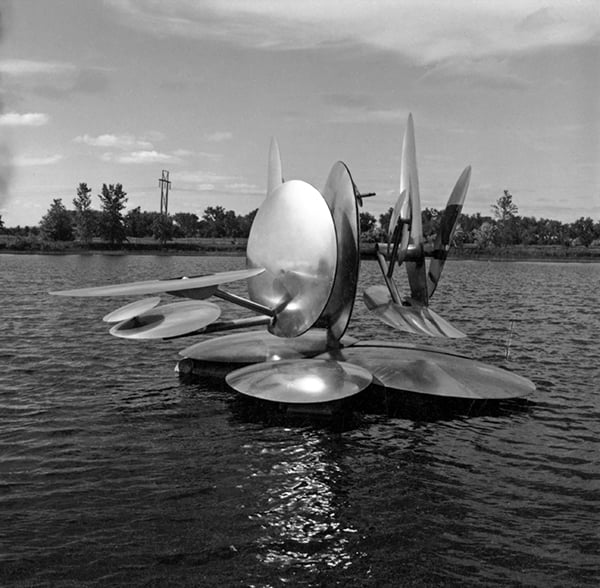
George Baker, Nebraska Wind, Kearney Rest Area Westbound. NSHS RG3213-710
It started with an idea to create a “500-mile sculpture garden” across the state, placing art at Interstate rest areas to provide Nebraskans and tourists access to “the best sculpture of our time outside museum walls.” And it would be done in celebration of America’s Bicentennial.
While the project would feature the work of nationally-respected artists, many Nebraskans objected that the artists were not Nebraskans, that all the designs were abstract and not representative of the state, and that state tax dollars should not be used in this way.
The public was mostly not aware that nearly three-quarters of the money came from private donations; a federal grant covered most of the rest. The private group organizing the project planned to give the sculptures to the state.
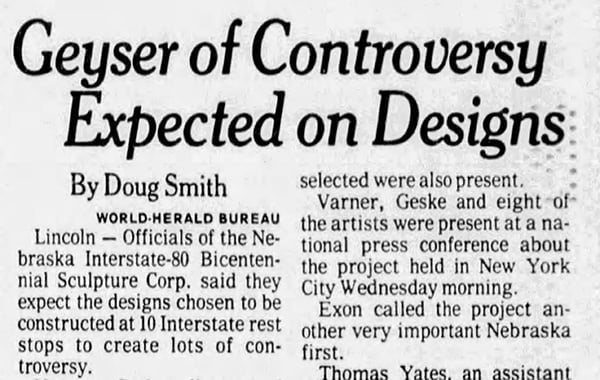
Omaha World-Herald, July 10, 1975
The abstract designs were especially polarizing. Some people appreciated abstract art and the way the pieces were designed to enhance the landscape rather than represent anything specific. Others agreed with a very 1970s Nebraska headline: “Mayors Say Sculptures ‘Too Far Out.’”
In some ways, it didn’t help that the project was happening in celebration of the bicentennial of American independence. Traditional ways of commemorating history—and especially the nation’s founding—were deeply ingrained. In 1976, Nebraska Educational Television (as Nebraska Public Media was then known) produced a documentary film that has been digitized by the Nebraska State Historical Society. (Watch it here: Part 1 and Part 2.)
Perhaps the most fascinating part of the film is the footage from public hearings around the state in which Nebraskans speak passionately both for and against the sculptures. Proponents liked the educational possibilities and the project’s artist-in-residence program. They felt it would bring good publicity and tourist dollars. Opponents criticized the designs and the presumed used of state tax dollars, raised concerns about maintenance, and questioned whether rest areas were a good location. They also did not think a Bicentennial project should feature non-historical work by non-Nebraska artists.
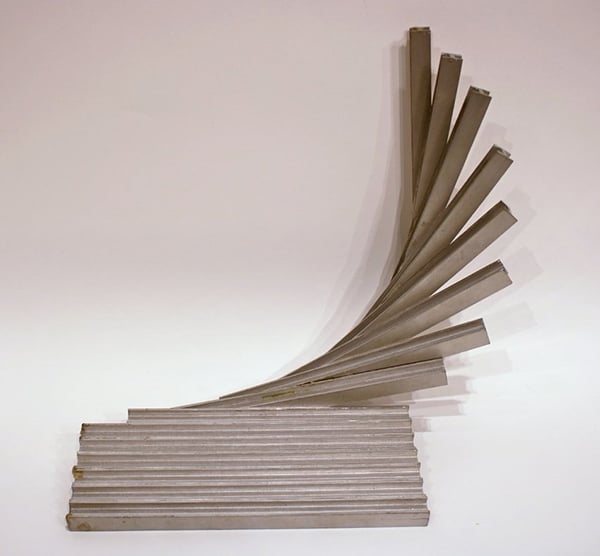
Maquette of Linda Howard’s sculpture Up/Over, showing an early version of the design now at the Ogallala Rest Area Westbound. NSHS 7565-415
In the end, the controversy may have helped the project by giving it a lot of free publicity. The first seven of the ten sculptures were unveiled on July 4, 1976. In the Spring 2026 issue of Nebraska History magazine, Gail DeBuse Potter writes that “Nebraskans are often defensive about ‘outsiders,’ whether it is a New York sculptor, or a University chancellor. Tradition is hard to break in Nebraska and, although there may be opposition to a person, a building, or a sculpture initially; either fifty years or at least one generation later it is usually accepted.”
This post is based on Gail DeBuse Potter, “The Bicentennial Sculpture Project: A Nebraska Controversy,” Nebraska History, Spring 2026 issue. NSHS household-plus members receive four issues of Nebraska History magazine per year. Learn more.