
During the Christmas season of 1886, a man from New York gave a scrapbook to his cousin in Connecticut. He’d filled the book with printed materials from the era, and in an attached note, he included the “warm love & best wishes of the compiler.”
The ephemera that he’d pasted into the book’s 200 pages include everything from news clippings and magazine ads to political cartoons, product labels, and photographs. While many of the items reveal an interest in national news and military history, the overall content varies widely and offers an eclectic snapshot of the period.
Since that time, the same family has owned the scrapbook and passed it down through the generations. After 140 years, the book had fallen into poor condition and the family, now based in Nebraska, brought it to the Ford Center to help preserve it for the future.
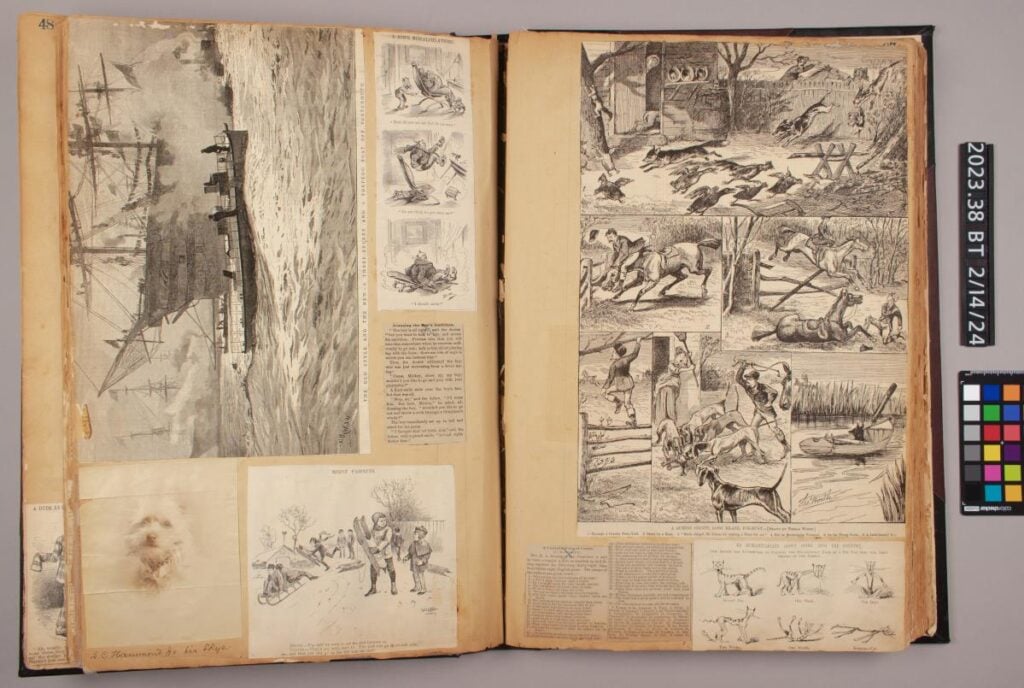
The 19th century scrapbook includes clippings printed on many different kinds of paper, as seen in this before-treatment image. The various papers had deteriorated at different rates, resulting in different levels of discoloration and brittleness throughout the text block.
The book paper was made from wood pulp that had yellowed and become brittle with age. Meanwhile, the hundreds of pieces of ephemera were all printed on different types and weights of paper.
The book paper was weaker than many of the clippings attached to it, causing differential stress and tears. Some of the clipping papers had held up well, but many were fragile and discolored.
Pressure-sensitive tape had been applied in a past attempt to address some of the damage, but the tape had also discolored and turned brittle over time.
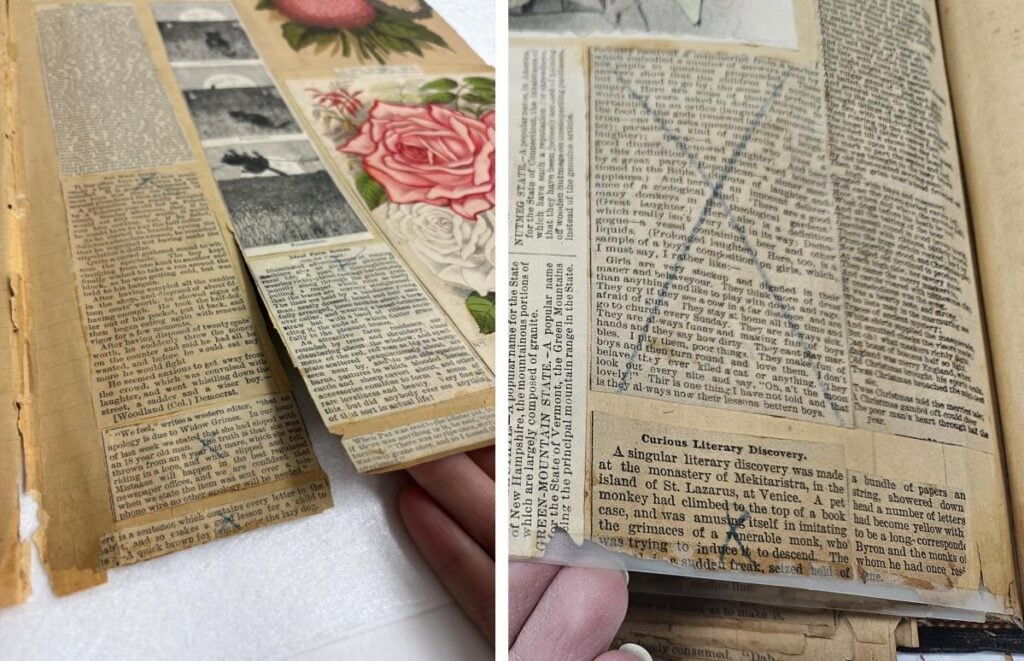
Damage to both the book paper and the clippings is visible in these during-treatment images. Areas of the scrapbook with ephemera are stronger and heavier, thanks to the added layers of paper and adhesive. Meanwhile, areas without any clippings are lighter, weaker, and prone to tearing when the pages are flexed and turned.
The book had been rebound at some point, and the construction of the new binding was causing further damage to the pages.
Staples that were used to secure folded book sections to the spine piece had rusted or broken into pieces. The rigid staples had also cut through the folds of the brittle paper, causing entire sections of the book to fall out.
Another aesthetic concern was the cloth on the book’s back cover board. The burgundy cloth appeared to have been in direct contact with a glossy paper, which left behind a shiny, sticky residue and paper remnants.
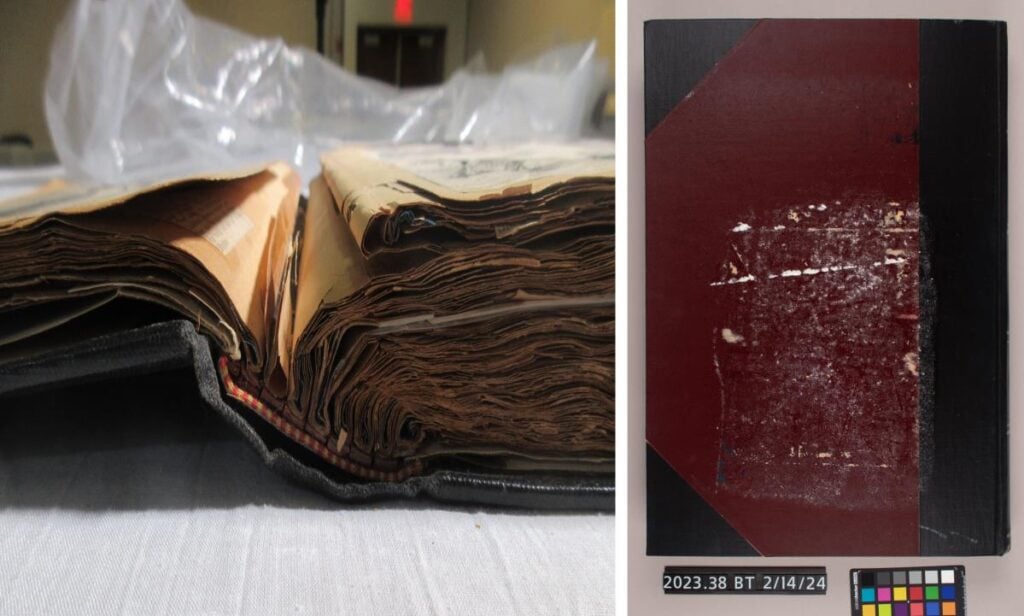
The poor condition of the binding is evident in these before-treatment images. Several sections of the book were loose or detached as a result of failed staples, and a sticky residue covered a large portion of the back cover board.
The goal of the treatment was to stabilize the scrapbook by repairing the text block and making the binding functional.
First, we separated the text block from the cover boards and spine and removed all remaining staples. The pressure-sensitive tape repairs were removed by applying solvents to soften the adhesive and by using additional tools to remove the tape.
Next, a reversible water-based adhesive was used to reattach loose pieces of ephemera to the book paper. We stabilized the book paper itself by repairing the tattered edges, long tears, and damaged folds with strips of strong, lightweight Japanese paper. These reinforcements, toned to a similar color as the book paper, will support the pages and help prevent tearing during future use.
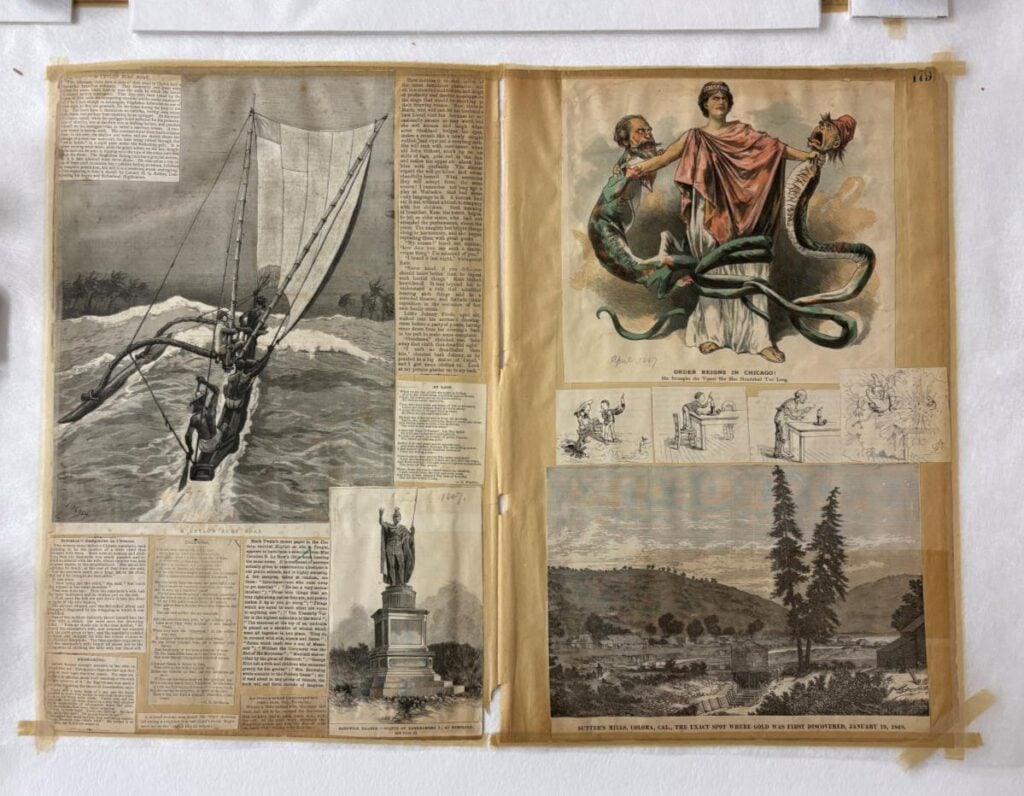
Strips of Japanese paper were applied to the book paper to mend damage and provide support, as seen in this during-treatment image. The Japanese paper is thin and transparent enough that any text remains legible beneath the repair.
Once the book paper and clippings were stable, we turned our attention to the binding. All of the pasted-in ephemera had bulked up the text block so much that it was relatively skinny at the spine and much thicker in all other areas — an imbalance that could put stress on the book once it was rebound.
To remedy this, we introduced sections of nestled folded sheets of paper throughout the text block that extended about two inches in from the spine. These short sections, called stubs, helped to level out the depth of the text block. Then, instead of using staples, we reassembled the book by punching small sewing holes in the folds and sewing the sections together with thread.
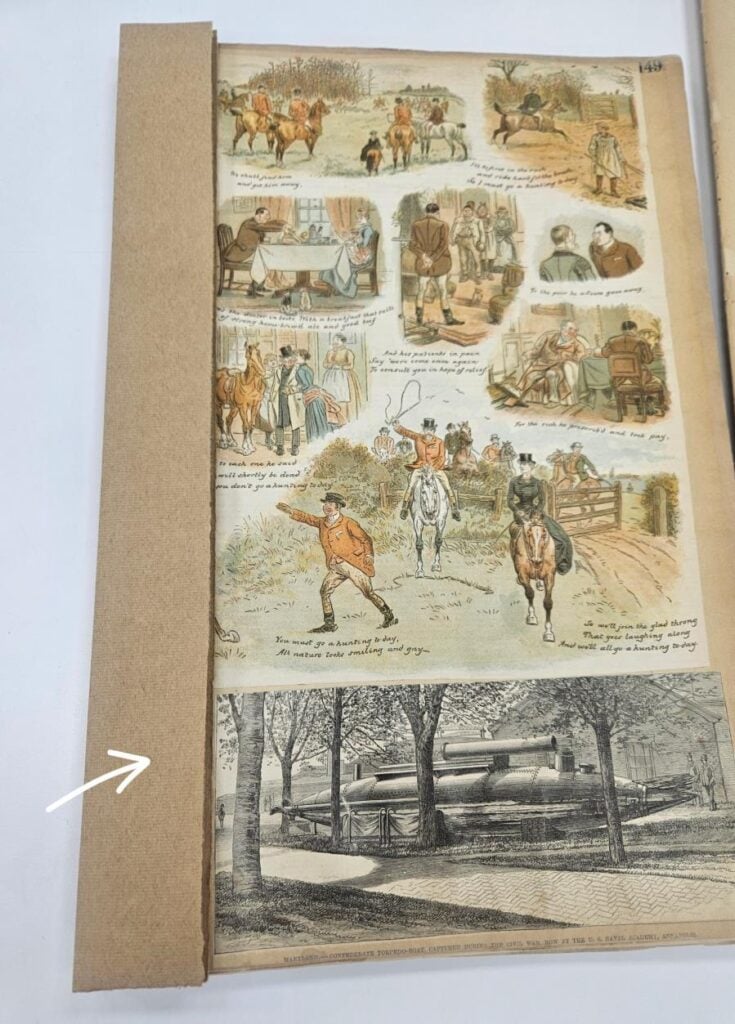
One section of stubs is visible in this during-treatment image. In total, five stubs sections were added to help balance out the text block.
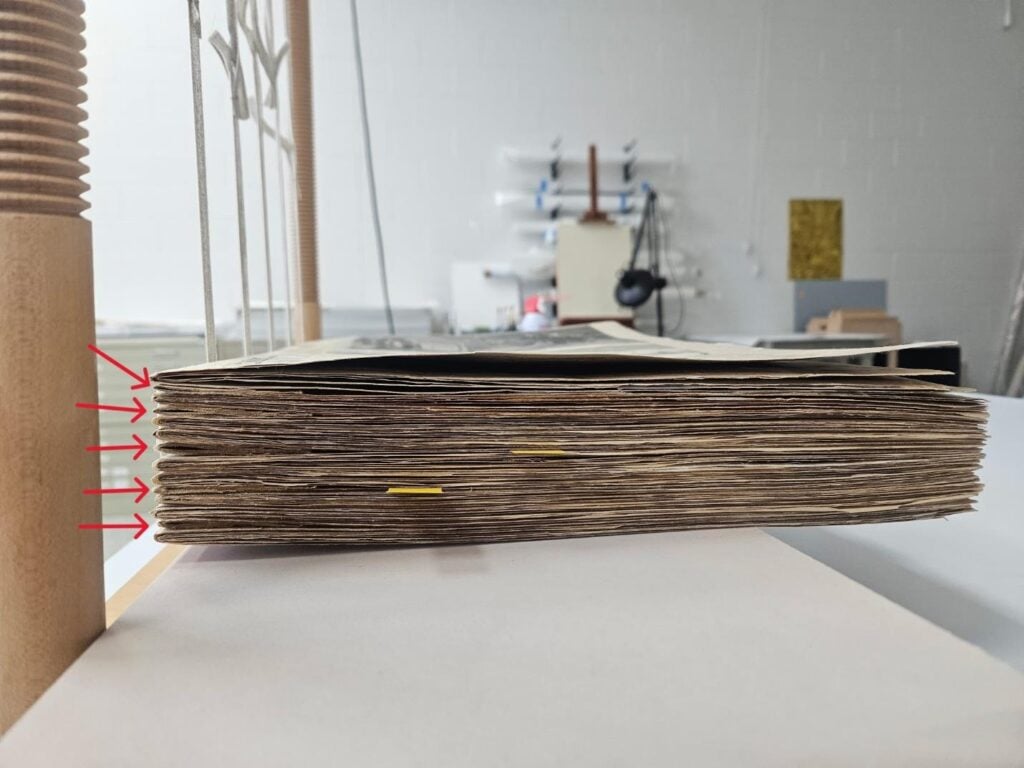
The text block is being resewn in this during-treatment image. Its thickness is consistent from the spine to the opposite edge — a result of the stubs sections, which are noted with red arrows.
Unfortunately, the sticky residue on the back cover was irreversible. We removed the damaged book cloth and replaced it with new cloth matching the previous color and texture.
Finally, we reattached the text block to the boards and spine piece, making the book whole and secure once again. The scrapbook’s owners can now read and enjoy it before eventually passing it down to the next generation of the family.
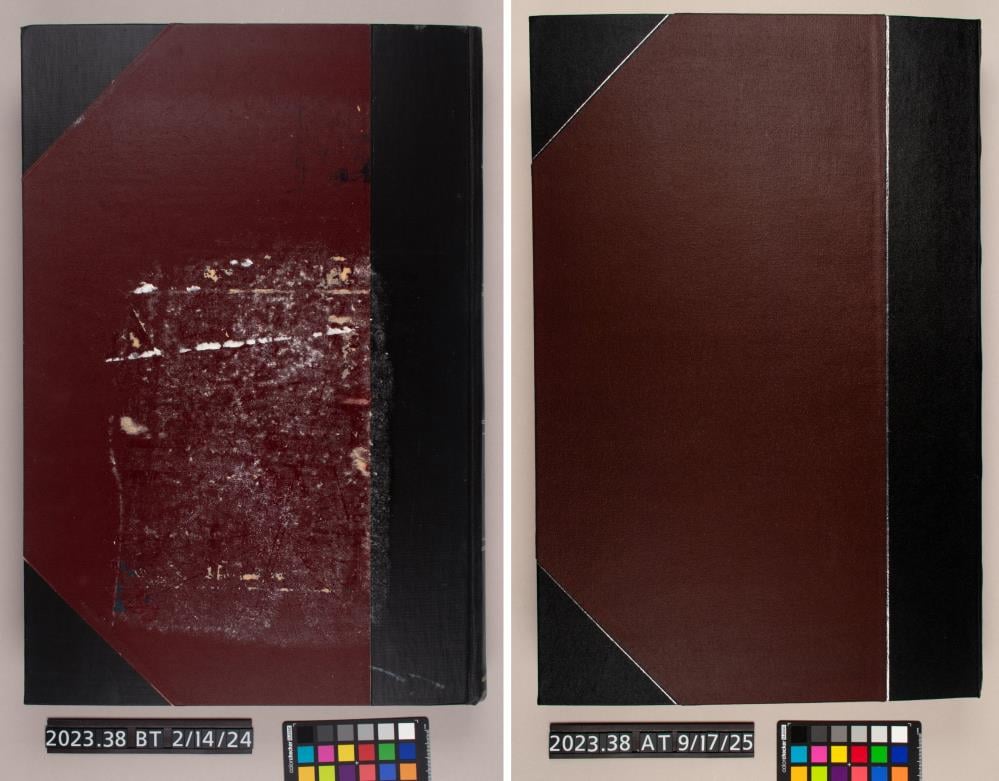
Before- and after-treatment images of the scrapbook’s back cover board.
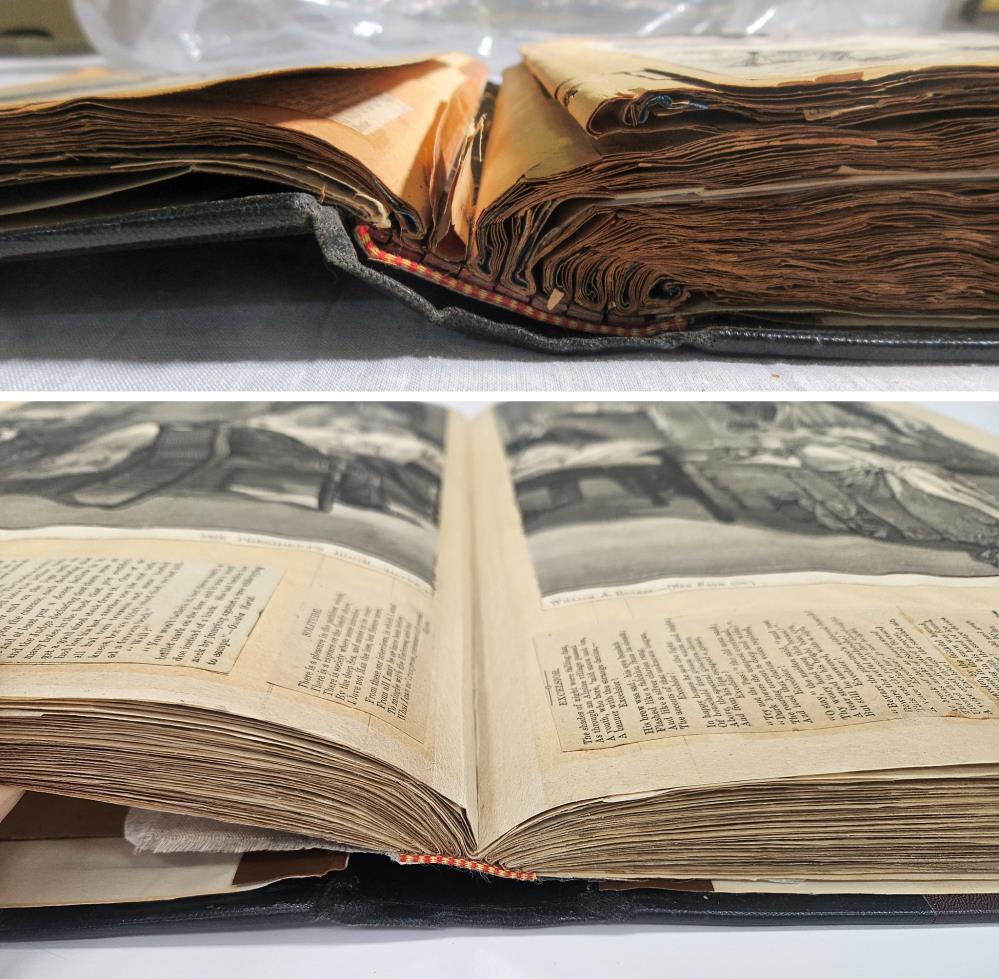
Before- and after-treatment images of the scrapbook’s opening.
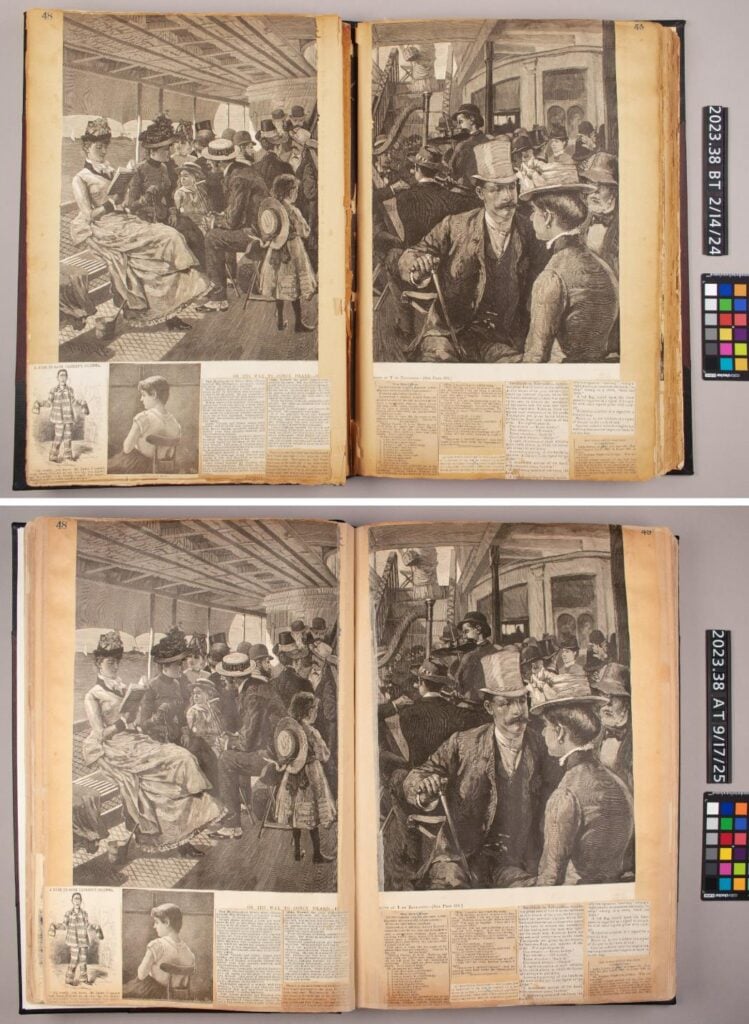
Before- and after-treatment images of a two-page spread in the scrapbook.
(Published July 2026)