Nebraska History Moments – For Further Reading Content

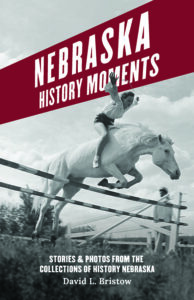 Do you have your copy of Nebraska History Moments, published by the Nebraska State Historical Society (NSHS)? This page is for readers who have the book and want to know more about its stories. Below are links to relevant articles, blog posts, photos, and objects on our website, plus a few outside sources. We have many more “Moments” to share.
(Page number, page title)
1. Footrace in Bartlett See more from John Nelson’s photo collection.
2. Pawnee women and girls Read a brief introduction to the Pawnee and Lakota tribes. The two tribes were rivals. A state historical marker stands near Massacre Canyon. A surprise attack by Lakotas in 1873 was a disaster for the Pawnees, and led in part their departure from Nebraska.
3. Šebesta Family Trunk Read more about the Nebraska immigrant experience. A special issue of Nebraska History Magazine, “The Czech-American Experience,” is online.
4. Almost the Capital City More about Francis Burt, Nebraska’s first territorial governor. A 1975 Nebraska History article looks at Bellevue’s first twenty years (PDF).
5. Nebraska’s First Capitol What was Nebraska’s first territorial capitol like inside?
6. David City Base Ball Club More about race and baseball in Nebraska in this Nebraska History article (PDF).
7. Railroad Water Tower Take a look at this 1915 railroad map of Nebraska (PDF) one of many in the collections of NSHS.
8. Mystery Grave A longer version of this story appeared in Nebraska History News in 2012 (PDF):
9. Nebraska’s First Unicameral Session Learn more about how Nebraska got its unique legislature in Nebraska History (PDF).
10. Lakota Family at Train Depot Read more in Nebraska History (PDF).
11. Unloading Sugar Beets Read more about the birth of North Platte Valley irrigation.
12. A cotton mill in Nebraska? Read a longer version of this story.
13. Clara Bewick Colby and The Woman’s Tribune Learn more about the suffrage movement in the NSHS’s book, Votes for Women: The 19th Amendment in Nebraska. Clara Bewick Colby is prominent in this article about the Nebraska women’s suffrage movement published in Nebraska History (PDF).
14. El Ramon Londres Cigar Box See more Nebraska cigar boxes from the NSHS collection here.
15. KOIL Radio Sound Effects We don’t know more about this photo, but this Nebraska History article discusses the early years of radio in Norfolk (PDF). And Wayne’s first radio station was in a hospital!
16-17. Then and now: O Street floodwaters Read more about the 1908 flood.
18. Chrisman sisters, Homesteaders Read more about the Homestead Act.
19. Those Fish Stories NSHS has a collection of such locally-produced postcards.
20-21. Broken Bow’s three rival newspapers Solomon Butcher, whose 3,500 glass plate negatives are preserved in the collections of NSHS. His iconic images have national significance, and the Nebraska State Historical Society partnered with the Library of Congress to make them available online.
22-23. Neligh Mill Neligh Mill State Historic Site is operated by NSHS. Here are more historic photos and a history of the mill.
24. Crazy Horse’s Grave Learn more about Camp Sheridan and the Crazy Horse grave in Nebraska History (PDF).
25. A Mugshot Headlock See more mugshots in the online exhibit, Doing Hard Time: Historic Nebraska Mugshots.
26. Cornhusker Ordnance Plant Learn more at The War: Nebraska Stories at NebraskaStudies.org, produced by NSHS, NET Learning Services, and the Nebraska Department of Education.
27-29. Train Wreck, Controlling the Trains Here’s a brief introduction to the role of railroads in Nebraska settlement. NSHS holds several large collections that are vital to railroad historians, including the archives of the Burlington and Union Pacific railroads.
30-31. Frederick Douglass’s Nebraska Sister Read the full version of this story.
32. Dust storm Nebraskans tell amazing eyewitness stories in short videos from the Wessels Living History Farm.
33. Hammer gang Our late colleague John Carter found the article about the hammer gang. We don’t know more about it, but here’s a look at a traveling circus based in Wayne, Nebraska.
34. Bellevue Ferry Sarpy County namesake Peter Sarpy operated one of the earliest ferries in the Bellevue area.
35. Cottonwood Springs Read more about Cottonwood Springs during the Civil War years in Nebraska History (PDF).
36. Road Ranche Photographer Charles Savage documented other Nebraska road ranches in the 1860s (and Chimney Rock too!). See this Nebraska History article (PDF).
37. Eve of Game Day It was a good idea to attend Cornhusker football games in the 1930s because there was no TV, and the university allowed only one radio broadcast per season.
38-39. Lillie Cornhusker Here’s a longer version of this story.
40. Union Stockyards Learn more at Beef State.
41. Mailbags in the Snow These artifacts show something of the life of a Rural Free Delivery mail carrier.
42. Ken Eddy’s Drive-In See more photos from inside Ken Eddy’s.
43. Bert Martin We haven’t been able to learn what became of Bert Martin after this case.
44. Omaha Nation Effigy Bowl It is a rare enough object that in recent years it has been loaned for exhibitions in Paris and New York City.
45. Western Nebraska “Ghost Counties” Read more at our blog, or read the complete Nebraska History article (PDF).
46. The “Saloonn” in Scottsbluff The early buildings in the photo weren’t built to last, but many historic Scotts Bluff County properties are listed on the National Register of Historic Places.
47. Little Girl on the Ledge at Central Hospital Read about Nebraska’s early nurse training schools (1888-1926) in Nebraska History (PDF).
48. Looking east along Farnam Street Read Rasp’s letters home in Nebraska History (PDF).
49. Depression-era relief office When the US entered World War II, Depression-era Hastings was suddenly transformed into wartime boomtown. Read about it in Nebraska History (PDF).
50. Cudahy Packing Co. See more photos in this introduction to Nebraska’s Stockyards and Packing Houses. NET’s Beef State project looked at the birth of South Omaha and the stockyards.
51. Groundbreaking, Nebraska State Capitol Read more about Nebraska’s five capitols. NSHS has a large number of photos and archives related to the capitol. Take a virtual tour of the capitol.
52. University of Nebraska Read a longer version of this article with additional photos.
53. WWII “Short Snorter” NSHS has more World War II resources than we can practically link to here. Type “World War II” in the search window. “The War: Nebraska Stories” provides a good introduction with lots of photos and personal stories.
54-55. Restoring a Painting that Inspired Willa Cather Read a longer version that explains how Kenneth Bé treated the painting.
56. Sod House Family Read Roger Welsch’s 1967 Nebraska History article, “The Nebraska Soddy” (PDF), a short version of what he later described in his book, Sod Walls.
57. Rural Free Delivery Postal Wagon See RFD artifacts from the Nebraska History Museum.
58. Nebraska vs. Grand Island College Read about Nebraska’s undefeated, untied, unscored-upon 1902 season. Did Darth Vader play for the Huskers that year?
59. Stop! That Sign’s Yellow! If you really want to geek out on the history of traffic signs, the Federal Highway Administration produced this history of traffic standards, starting with the first center line painted on a road in 1911.
60-61. Negro Motorist Green Book The New York Public Library has digitized many editions of the Green Book. Browse them here.
62. Electric washing machine The Library of Congress has a large online collection of Arthur Rothstein’s photos, including many from Nebraska.
63. Girls’ Basketball Team See more photos of the 1924 Blue Springs High School girls’ basketball team.
64. Missouri River Flood Nebraska History told the story of the flood of ’52 just two years after it happened.
65. A Pledge Not to Drink Read more about the Red Ribbon Club in Nebraska History (PDF).
66. Earliest known photo of African Americans in Nebraska This blog post links to many of our Black history resources.
67. First State Capitol Page 5 tells the story of the first territorial capitol; this is the first state capitol. Read more about Nebraska’s five capitols.
68. White Horse Ranch See NSHS’s collection of White Horse Ranch memorabilia, and watch video of a 1948 show at the ranch.
69. The Army’s Best Horsemen More photos from Fort Robinson when it was the army’s remount depot, and a brief summary of the fort’s long history.
70. Ladies Ward, State Hospital for the Insane Read Nellie Bly’s famous first book, Ten Days in a Mad-House, at Project Gutenberg. NSHS has the Norfolk Regional Center’s cemetery records from 1888 to 1954.
71. 1870s Omaha Skyline Two state historical markers tell the story of this landmark hill: Capitol Hill and Central High School.
72-73. Cowboy Grave Marker Read “‘A Peculiar Set of Men’: Nebraska Cowboys of the Open Range” from Nebraska History (PDF).
74. Death of Crazy Horse Fort Robinson State Park and History Center preserves the history of this important site. Historian Thomas Powers writes of the death of Crazy Horse and the search for the Lakota leader’s medicine bundle in this Nebraska History article (PDF).
75. Red Cross Day See more of Arthur Anderson’s WWI home front photos in Nebraska History (PDF). Another article describes the suppression of the German language in Nebraska (PDF).
76. Savidge Brothers A state historical marker commemorates the place where the Savidges began their first flight experiments. Learn more about Nebraska aviation in Wings Over Nebraska: Historic Aviation Photographs, published by the Nebraska State Historical Society and sold by University of Nebraska Press.
77. US Airmail at Offutt Field Read more about airmail in 1920s Nebraska.
78-79. Martin Bomber Plant Read a Nebraska History article (PDF) about the Martin Bomber Plant.
80. Robert Kennedy “Whistle-Stop” Campaign Read more about RFK’s 1968 Nebraska campaign. This Nebraska History article (PDF) describes that year’s important Nebraska Republican primary. Learn more about the campaigns at NET’s ’68: The Year Nebraska Mattered.
81. Hall County Courthouse Architect Thomas R. Kimball has been inducted into the Nebraska Hall of Fame. See more Nebraska examples of his work.
82. Before a Women’s Suffrage Parade Learn more about the suffrage movement in NSHS’s book, Votes for Women: The 19th Amendment in Nebraska. Read blog posts about Nebraska’s suffrage movement and anti-suffrage movement.
83. Niobrara on Wheels See more photos here.
84. Prohibition Raid Learn more about crime boss Tom Dennison in Nebraska History (PDF). Omaha’s most notorious bootlegger was “Queen Louise” Vinciquerra.
85. How to Cross the Platte River See a larger version of this map. Kearney City, informally known as Dobytown for its adobe buildings, was described by an 1860 visitor as a “gambling hell”
86. Mexican Immigrant Mother and Children The Spring 2019 issue of Nebraska History describes how a multiethnic, working-class immigrant community took shape across the state. Keep reading.
87. Baby May of the Walter Savidge Amusement Company Read more, and see more photos, about the Walter Savidge Amusement Company.
88. Gage County Courthouse Read more about Nebraska properties listed on the National Register of Historic Places, including a map.
89. Sandhill Prosperity More about “The Kinkaider’s Song” and photographer John Nelson.
90. Willa Cather in Beauty and the Beast Read more about Willa Cather in Beauty and the Beast. Learn more about Cather and her writing at the Willa Cather Foundation’s website.
91. Pilger Pagoda See more photos of historic Nebraska gas stations.
92. William Jennings Bryan accepts presidential nomination Read more about Bryan’s 1908 campaign. This illustrated bio provides a brief overview of his career.
93. Hose Team What was firefighting like in the nineteenth century? These news clippings will give you some idea: a disastrous Nebraska City fire in 1860; and an 1878 clipping from the Nebraska State Journal.
94. Confronted by a Question of Clothes Having no other information about this photo, we searched Wescott’s name at Nebraska Newspapers, a collaborative site developed by the Nebraska State Historical Society and the University of Nebraska-Lincoln. A quick search led us to this 1922 Plattsmouth Journal article.
95. Engineer Cantonment Here’s a longer version of this story.
96. Omaha Legion Airport (Today’s Eppley Airfield) The early history of Omaha’s airfields has more to do with airmail than passenger travel. Learn more about Nebraska aviation in Wings Over Nebraska: Historic Aviation Photographs, published by the Nebraska State Historical Society and sold by University of Nebraska Press.
97. Pilot Evelyn Sharp This photo was taken as part of National Air Mail Week, a celebration marking twenty years of airmail service. Read more in Nebraska History (PDF).
98. “Bulldogging” at Nebraska’s Big Rodeo Here’s a 1925 photo from the Burwell rodeo. Learn more about the Burwell rodeo’s history. In 2015 NSHS published Rodeo Nebraska by photographer Mark Harris, featuring his contemporary small-town rodeos.
99. Buck-A-Roo Motel The Buck-A-Roo is gone, but the Hotel Norfolk is listed on the National Register of Historic Places. View our interactive Nebraska map of National Register sites; search “Hotel Norfolk.”
100. Nebraska versus Stanford in the Rose Bowl HuskerMax has a recap of this game.
101. Pembleton Family Band The Grand Army of the Republic was a large and important organization in its day. We have the records of the Nebraska Department. The first page of this PDF gives a short summary of what the organization did.
102. Republican River Flood Read more about the Republican River Flood of 1935 in Nebraska History (PDF).
103. Earliest known photo of Chimney Rock Read John Carter’s article about the 1866 photo in Nebraska History (PDF).
104. Poster from Oscar’s Palladium See more Oscar’s Palladium posters in the NSHS collection. Read about the beginnings of Omaha’s jazz scene in Nebraska History (PDF).
105. This $3 bill was real money! This territorial banknote is one of several in the collections of the Nebraska State Historical Society.
106. Shoe Repair Shop Read about selling shoes in 1888.
107. Old and New Locomotives Railroads played a huge role in shaping Nebraska settlement and politics. Nebraska History has published many articles about railroads over the years, such as (all links go to PDFs): the Union Pacific’s role in the settlement of Nebraska; how the Burlington Railroad brought Mennonite settlers; why 1890s farmers were angry about railroad rates and wanted government regulation; a 1922 railroad strike in Havelock and Plattsmouth; the curtailment of railroad service in the 1920s and 1930s.
108. Movie Night at Orthopedic Hospital Read about another early orthopedic facility, the Hattie B. Munroe House for Convalescing Crippled Children in Omaha.
109. Wedding Dress NSHS has other wedding dresses in its collection. Read the story of an unusual wedding in a photography studio.
110. Pawnshops on lower Douglas Street This is part of the larger story of hobos in Nebraska. See more of Vachon’s Nebraska work at the Library of Congress (search “Vachon Nebraska”).
111. Grade School Classroom In the 1890s, Sadie Smith’s friends told her that her high school diploma made her too educated to teach rural school. Most Nebraska schools were run on the cheap.
112. Gering’s First Trees Nebraska was notorious for its lack of trees, which in most of the state grew mainly along creeks and rivers—and were cut down by railroads and settlers. A desire for more trees prompted the creation of Arbor Day, first proposed by J. Sterling Morton, a Nebraska politician so concerned about Nebraska’s lack of timber that he opposed the use of Christmas trees. Frank Shomaker was an important photographer and naturalist. See more of his work in Nebraska History (PDF):
113. Downtown Gretna We take pavement for granted, but having local streets paved was a big investment for communities, but it mean no longer driving through deep mud. Outside of town, early Nebraska roads were costly but necessary, and opinions as to what was necessary changed with Nebraska’s changing auto culture.
114. Junior KKK Membership Application Read more about the 1920s Nebraska KKK.
115. Behlen Atomic Test Building Read more about Behlen’s atomic test building.
116-117. Cars and Pedestrians in Downtown Omaha These Nebraska History articles (PDFs) tell about the introduction and growing acceptance of automobiles: “The Devil Wagon Comes to Omaha: The First Decade of the Automobile, 1900-1910”; “Nebraska’s Changing Auto Culture, 1900-1930”; and “Petroleum, Politics, and Prices: Omaha’s Gas War of 1924.”
118-119. Mike Shonsey’s Cattle War Rifle Read more about Mike Shonsey and his Winchester Model 1886 carbine. Shonsey’s story is part of the larger story of Thomas B. Hord’s transformation of the Nebraska cattle industry. Read more in Nebraska History (PDF).
120. Town of Omadi “Extinct in Missouri River” The Missouri River has a long history of changing its course and making life difficult for steamboat pilots and local residents. Nebraska History has published several relevant articles (PDFs), including reminiscences of a steamboat captain; steamboat wrecks on the river; civil engineers’ early attempts to control the river; and flood control in the Missouri Valley (1902-1973). Today the Missouri National Recreational River between Yankton and Sioux City is the last portion of the lower river that hasn’t been changed beyond recognition.
121. Rocking Chair Mitchell arrived in Nebraska at a time when towns along the Missouri River were just being established. Many communities did not survive. Read the story of Plattsmouth’s rival, Oreapolis.
122. Telephone Office and Outhouse Read about an early phone company, the Lincoln Telephone Company (1903-1908) in Nebraska History PDF).
123. Susan B. Anthony and the Abbott Sisters Read more about Grace and Edith Abbott. A Nebraska History article (PDF) shows how US women’s suffragist leaders focused on Nebraska during its 1882 Nebraska referendum campaign. Our illustrated book Votes for Women: The 19th Amendment in Nebraska tells the larger story of the suffrage movement in Nebraska.
124. Hay on a Truck Learn about Nebraska farming in the 1930s at the Wessels Living History Farm website.
125. Laundry workers See this Nebraska History article (PDF) about the 1923 report on child labor in the sugar beet fields. Grace Abbott was inducted into the Nebraska Hall of Fame in 1976.
126-127. Elvis Fans at Omaha Civic Auditorium Read more about Elvis’s Nebraska shows.
128. Jumpin’ with Gold’s Gold’s was an important Lincoln retailer in the twentieth century, and their former department store building remains a downtown landmark. Read more.
129. Scribner Tornado You might not believe the Lincoln Journal’s description of the Scribner tornado without a photo. Tornados sometimes inspired tall tales. But the reality of the worst storms (such as Omaha in 1913) needed no exaggeration. 130. Wind Wagon at Fort Kearny Read more about the wind wagon.
131. Construction of the spillway tower at Kingsley Dam Students learn about the Tri-County Project at NebraskaStudies.org, an online project of the Nebraska State Historical Society, NET Learning Services, and the Nebraska Department of Education.
132. Dr. Susan La Flesche Picotte Read more about Dr. Picotte and her hospital. Her house is also listed on the National Register of Historic Places.
Become a Member!
Our members make history happen.Join Now
You May Also Enjoy
Up-Close and Personal: NSHS Collections at the Nebraska History Museum
Marker Monday: Oketo Cutoff
The Men of South Omaha, 1892
No results found.